A straight forward guide to Retention & Dry Pond Maintenance for Nashville HOAs from Dragonfly’s Stormwater Management experts.
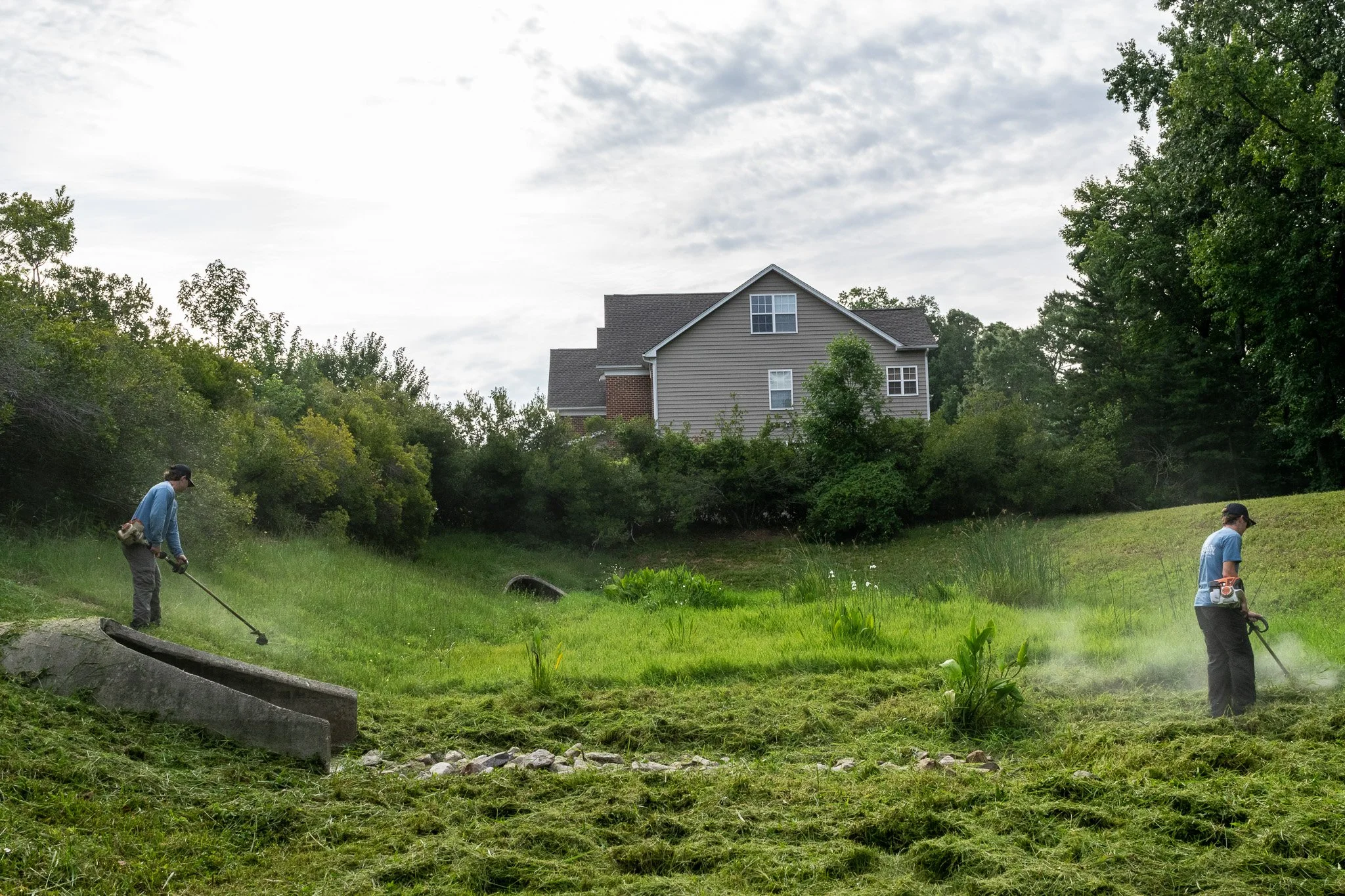
What Nashville HOAs Need to Know About Pond Maintenance
For many HOAs across Nashville and Davidson County, retention ponds, or wet ponds, and dry ponds, or detention basins, are often viewed as passive landscape features, something to mow around, budget for occasionally, and largely ignore unless a visible problem appears. In reality, these ponds are highly engineered stormwater devices that play a critical role in flood prevention, water quality protection, and regulatory compliance. When they are misunderstood or improperly maintained, they can quickly become one of the HOA’s largest liabilities.
HOA board members and community managers are legally responsible for ensuring these stormwater systems function as designed and meet local and state compliance requirements. Yet many boards inherit ponds from developers with little documentation, limited understanding of maintenance obligations, and no clear plan for long-term care. This lack of clarity often leads to deferred maintenance, unexpected violations, and expensive emergency repairs.
This guide is designed to help Nashville-area HOAs clearly understand their responsibilities, recognize the difference between retention and detention ponds, and implement maintenance practices that protect both the community and the HOA’s financial health.
Retention vs. Dry Ponds: Why the Difference Matters
Retention and dry ponds are often grouped together, but they serve very different purposes and require distinct maintenance approaches. Understanding which type of pond your HOA owns is critical, because inspection expectations, vegetation management, sediment control, and long-term repair strategies vary significantly between the two.
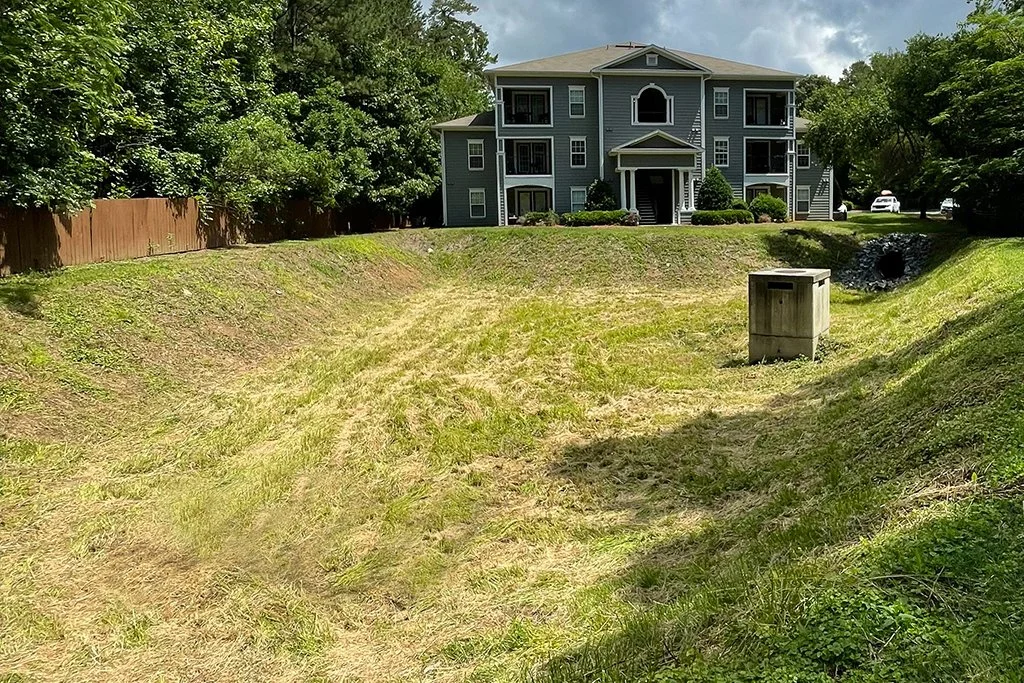
This is an example of a dry pond or dry detention basin.
Dry ponds are designed to temporarily hold stormwater during rain events and release it at a controlled rate to prevent downstream flooding. These ponds should be dry between storms and rely heavily on proper grading and properly functioning outlet structures to regulate water flow.
Temporarily stores stormwater after rainfall
Releases water slowly through engineered outlet structures
Primarily focused on flood control and peak flow reduction
Dry between storm events
Highly sensitive to clogged outlets, sediment buildup, and erosion
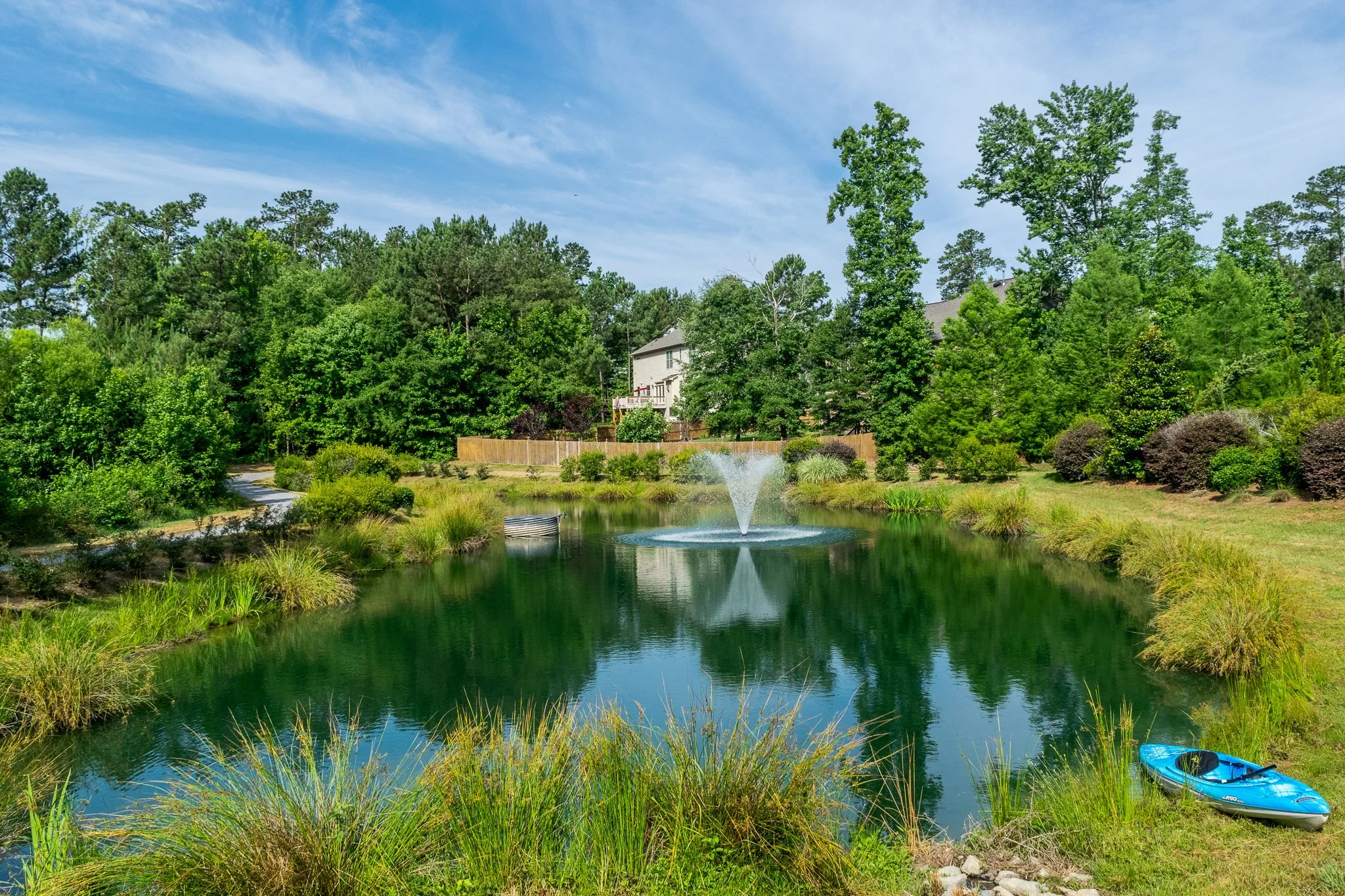
This is an example of a neighborhood stormwater retention pond.
Retention ponds, by contrast, are designed to permanently hold water and improve water quality while also managing runoff volume. Because water is always present, retention ponds require ongoing attention to shoreline stability, vegetation balance, and water quality conditions.
Permanently holds a pool of water
Improves water quality by allowing pollutants to settle out
Manages stormwater volume over time
Requires careful shoreline and embankment maintenance, along with occasional dredging
More susceptible to algae growth, invasive vegetation, and sediment accumulation
For HOAs in Nashville and throughout Davidson County, knowing whether a pond is retention or dry detention determines how it should be maintained, inspected, and budgeted for over time. Applying the wrong maintenance approach can shorten the life of the pond, increase liability, and create compliance challenges during inspections.
HOA Pond Maintenance Responsibilities Under Nashville Regulations
In Nashville and throughout Davidson County, HOAs are required to actively maintain stormwater infrastructure located within their communities. This responsibility does not fall on Metro Nashville or the original developer once the HOA has taken ownership. Boards are expected to ensure ponds are inspected regularly, maintained properly, and repaired promptly when issues arise.
Maintenance responsibilities typically include managing vegetation, controlling erosion, managing water quality, removing sediment and trash, maintaining inlet and outlet structures, and keeping detailed records of inspections and repairs. Failure to meet these obligations can result in notices of violation, required corrective actions, and potential liability if flooding or environmental damage occurs.
Why Mowing and Weed Eating Ponds Requires a Specialized Stormwater Contractor
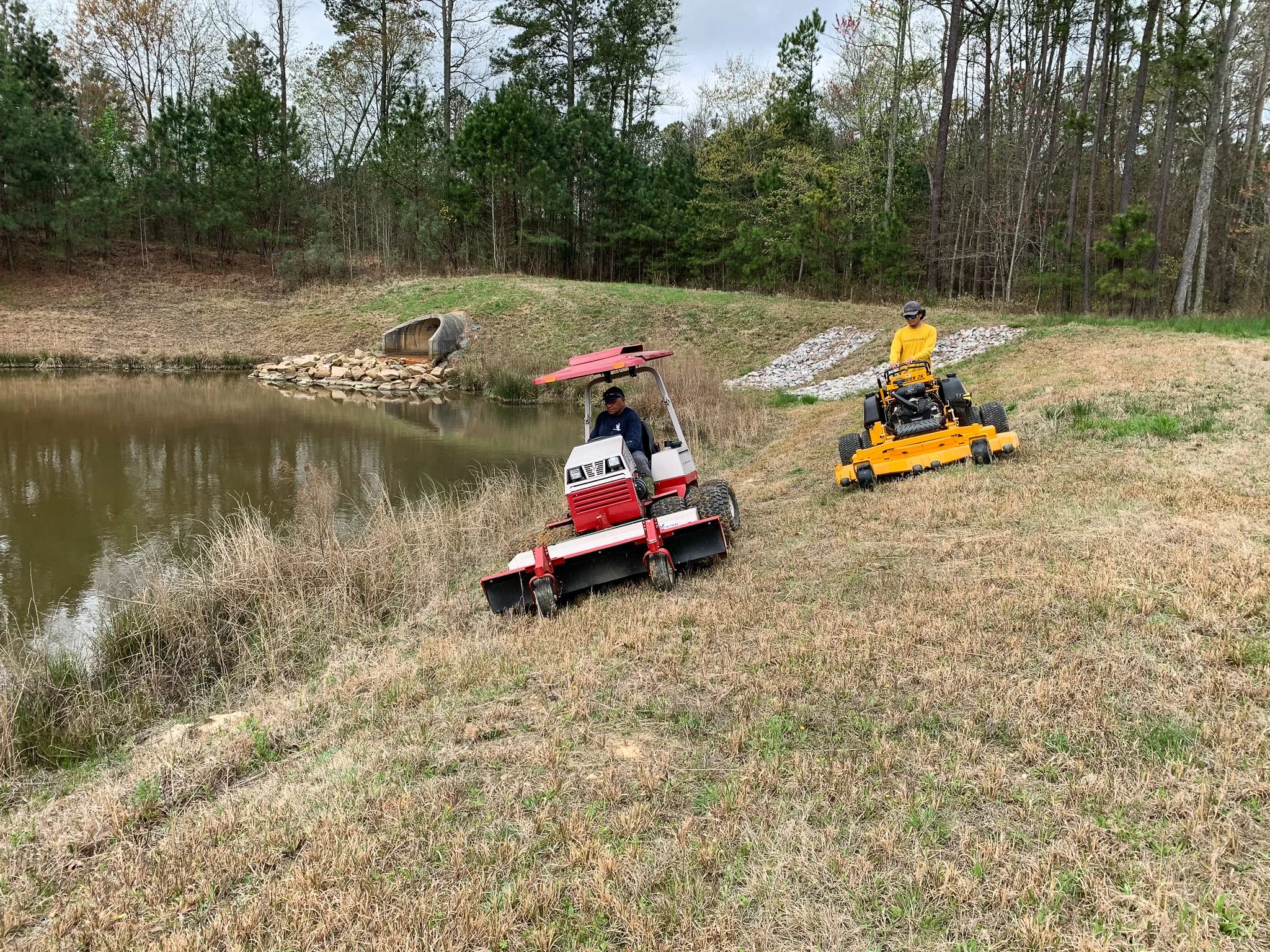
One of the most overlooked, and most misunderstood, aspects of pond maintenance is mowing and weed eating. Many HOAs assume this work can be handled by their general landscaping contractor, but ponds are not lawns, and treating them as such can create serious structural and compliance problems.
Retention and dry ponds are engineered systems with embankments, spillways, riser structures, and underground piping that must remain intact to function properly. Improper mowing heights, aggressive weed eating, or repeated scalping of pond slopes can weaken soil stability and accelerate erosion. Over time, this damage compromises embankments and increases the risk of slope failure during heavy rain events, which are common in Middle Tennessee.
General landscapers are also far more likely to unintentionally damage stormwater infrastructure. Outlet pipes, trash racks, concrete headwalls, and emergency spillways are often partially concealed by vegetation. Without stormwater-specific training, landscapers may strike or loosen these components, remove stabilizing vegetation, drive heavy equipment through dry pond basins causing damage, or unknowingly block flow paths. These mistakes can reduce pond capacity, disrupt water release rates, and trigger compliance violations during inspections.
Proper retention and dry pond mowing requires a strategic approach. Vegetation must be maintained at a height that prevents erosion while still allowing clear visual access for inspections. Cutting too short exposes soil and invites washouts; allowing vegetation to grow too tall can obstruct flow, hide structural damage, and prevent inspectors from accessing critical areas. Timing also matters, mowing saturated slopes can cause rutting and soil displacement that leads to long-term erosion issues.
A qualified stormwater contractor understands how to balance these factors. Mowing is scheduled around weather conditions, pond performance, and regulatory requirements, not just appearance. When performed correctly, it supports the pond’s long-term function, reduces repair costs, and helps the HOA demonstrate proper maintenance if questioned by regulators.
At Dragonfly Pond Works, stormwater pond mowing is treated as a technical maintenance activity, not just a cosmetic service. Our crews are trained to recognize early warning signs of failure, protect stormwater structures, and maintain vegetation in a way that preserves both compliance, system performance, and community aesthetics.
The Long-Term Value of Proactive Pond Maintenance for Nashville HOAs
Consistent, professional maintenance extends far beyond avoiding violations. Well-maintained ponds reduce the likelihood of emergency repairs, preserve property values and aesthetics, and protect the HOA from unexpected budget shocks. Proactive care also allows boards to plan maintenance expenses over time rather than reacting to failures under pressure.
HOAs that work with Nashville stormwater management specialists benefit from early detection of issues such as erosion, sediment buildup, pipe deterioration, and structural instability. Addressing these problems early is significantly more cost-effective than responding after a failure occurs.
Partner with Dragonfly for A Reliable Nashville Stormwater Pond Maintenance Provider
Retention and dry detention ponds are some of the most important, and most misunderstood, assets an HOA owns. They are not decorative features, and they cannot be maintained like standard landscape areas. Proper care requires technical knowledge, regulatory awareness, and a long-term strategy focused on performance, safety, and compliance.
For Nashville-area HOAs, partnering with an experienced stormwater contractor is one of the most effective ways to protect both the community and the association’s financial future. From inspections and vegetation management to erosion repair and structural rehabilitation, every aspect of pond maintenance plays a role in keeping these systems functioning as designed.
Dragonfly Pond Works has been helping HOAs manage stormwater assets with confidence since 2006. Our certified teams understand local regulations, recognize early signs of failure, and provide comprehensive maintenance solutions tailored specifically to stormwater systems, not general landscaping.
If your HOA is unsure whether its ponds are being maintained correctly, now is the time to take action.
Contact Dragonfly Pond Works to schedule a professional stormwater assessment and ensure your retention or dry pond remains compliant, functional, aesthetically pleasing, and protected for years to come.
Retention & Dry Pond Maintenance, Stormwater Compliance, Corrective Pond Repairs, & More
Learn about Nashville stormwater compliance basics, MS4 requirements, inspection timelines, and how HOAs and property managers can stay compliant with local regulations. Our experts explain the real world costs of neglecting proper stormwater pond maintenance in your Nashville HOA community.
Subscribe to our newsletter to receive informative and engaging news delivered right to your inbox.
Find us on Facebook, Twitter, Instagram, and LinkedIn for news, events, and more!
Dragonfly Pond Works provides specialized pond and stormwater management, compliance repairs, routine maintenance, and more in Nashville, Davidson County, Murfreesboro, Franklin, and Spring Hill, TN, Charlotte, Raleigh, Durham, Greensboro, and Wilmington, North Carolina, Charleston, Columbia, Myrtle Beach, and Greenville, South Carolina, Tampa, Sarasota, Naples, Fort Myers, Florida, Atlanta, Athens, Georgia, DC Metro, Fairfax, Northern Virginia, and Rockville, Gaithersburg, and surrounding Maryland.