
Stormwater Pipe Repair in Nashville: Preventing Sinkholes, Flooding, and Liability
Stormwater pipe repairs in Nashville help prevent sinkholes, flooding, and liability. Learn warning signs, risks, and repair options for HOAs and properties.

Stormwater Pipe Failures & Sinkholes in Middle Tennessee: What Property Managers Must Know
Stormwater systems do most of their work underground, and that’s exactly why pipe failures and sinkholes are among the most dangerous and costly stormwater issues facing properties across Nashville, Davidson County, Murfreesboro, and Franklin, TN. When a stormwater pipe fails, the damage is rarely isolated. What starts as a hidden structural issue can quickly escalate into sinkholes, flooding, pavement collapse, regulatory violations, and serious liability exposure.
For community managers, HOA board members, commercial and facility managers, and municipalities, understanding how stormwater pipe failures occur, and how to address them proactively, is essential for protecting people, property, and compliance status. This guide explains the causes, warning signs, risks, and repair options, with a focused look at sinkholes caused by failing stormwater pipes, a common issue in Middle Tennessee.
Understanding Stormwater Pipes and Why They Matter
Stormwater pipes are the backbone of a property’s drainage system. They convey runoff from inlets, parking lots, rooftops, and roadways to dry ponds, retention ponds, underground devices, bioretentions, or other types of stormwater Best Management Practices (BMPs). When pipes function properly, they reduce flooding, control erosion, convey stormwater runoff appropriately to reduce pollution, and help properties remain compliant with local and state stormwater regulations. Pipes are subject to aging, soil movement, corrosion, and hydraulic stress. When failures occur underground, surface symptoms may not appear until significant damage has already developed.
Why Stormwater Pipe Failures Are Common in Middle Tennessee
Middle Tennessee presents a unique set of challenges for underground stormwater infrastructure. Heavy rainfall events, clay-rich soils, and development patterns place constant stress on pipes that were often designed decades ago for less intense storm activity.
Common contributors to pipe failure in the Nashville region include aging infrastructure in older communities, corrosion of metal pipes, joint separation in concrete systems, sediment accumulation that restricts flow, and pipes that were undersized or improperly installed during original construction. Tree root intrusion and repeated high-volume storm events further accelerate deterioration, particularly where pipes connect to ponds or outfalls.
Because these failures occur out of sight, they are often overlooked until the consequences reach the surface.
Sinkholes Caused by Stormwater Pipe Failures
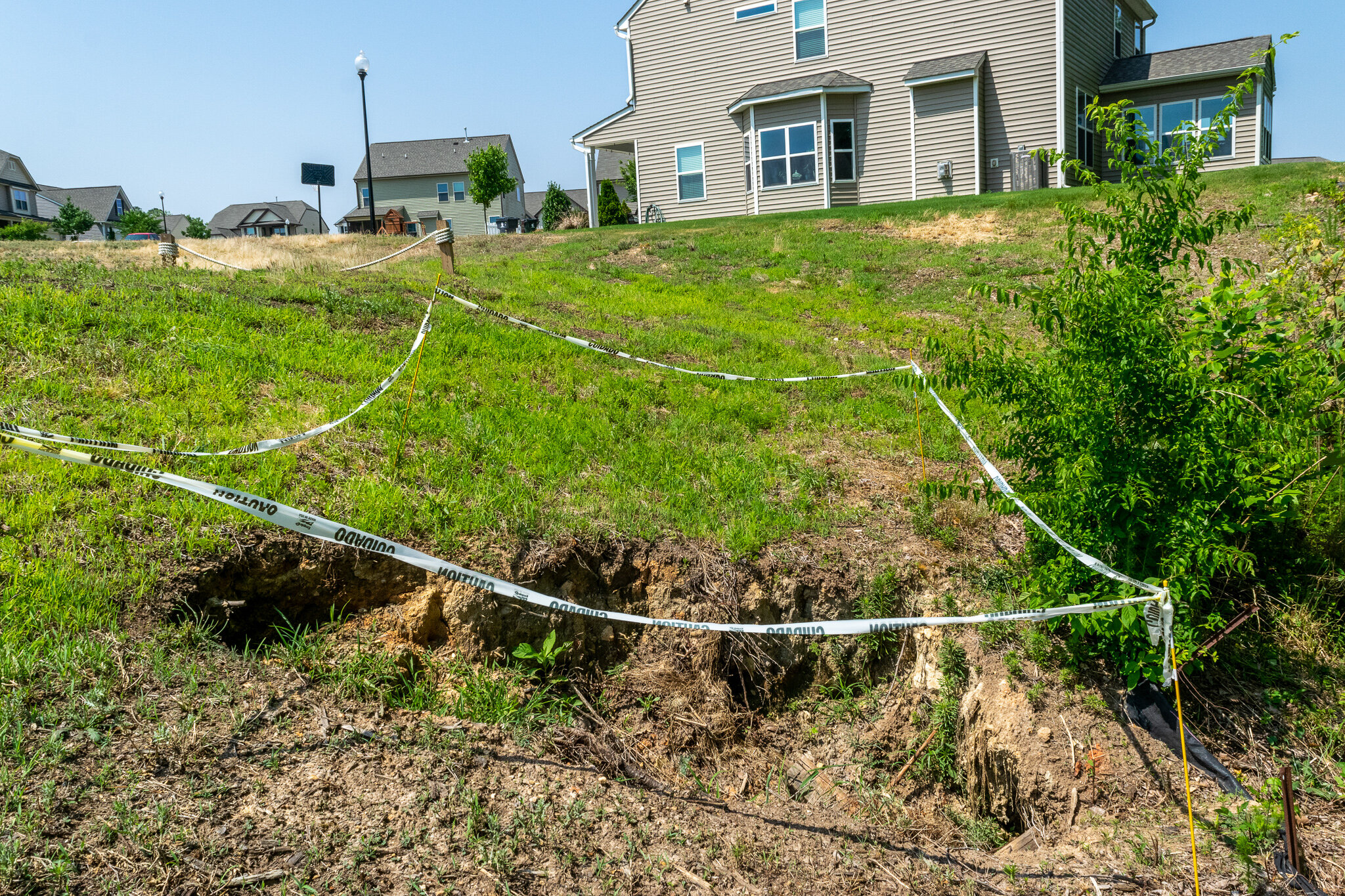
How Pipe Failures Create Sinkholes
Sinkholes associated with stormwater systems typically form through a process known as internal erosion. When a pipe cracks, collapses, or separates at a joint, stormwater begins to escape into the surrounding soil. Over time, flowing water carries soil particles into the pipe, gradually creating underground voids. These voids can grow for months, or even years, before the surface layer collapses.
Unlike natural sinkholes, stormwater-related sinkholes are often sudden and unpredictable. A parking lot, sidewalk, roadway, or landscaped area may appear stable one day and collapse the next, especially after a heavy rain event.
Warning Signs Before a Sinkhole Appears
While some sinkholes develop without obvious warning, many pipe failures show early indicators. Depressions or soft spots in turf, cracking pavement, recurring wet areas that do not dry out, and unexplained settlement near inlets or ponds can all signal underground erosion. Changes in pond water levels or unusual flow patterns at outfalls may also indicate a failing pipe upstream.
Recognizing these signs early is critical. Once a sinkhole forms, repair costs and liability risks increase dramatically.
Why Sinkholes Are Especially Dangerous
Sinkholes caused by stormwater pipe failures pose serious safety hazards. They often develop near high-traffic areas such as parking lots, drive lanes, sidewalks, and building foundations. A collapse can damage vehicles, undermine structures, or cause severe injury to pedestrians. During periods of heavy rainfall, common in Middle Tennessee, the size and severity of sinkholes can increase rapidly.
From a risk management perspective, sinkholes are among the most urgent stormwater issues a property owner can face.
Liability and Compliance Risks
For Nashville HOAs, commercial property owners, and municipalities, stormwater infrastructure located on private property is typically the owner’s responsibility. Once a pipe failure or sinkhole becomes visible, regulatory agencies may scrutinize the site, particularly if runoff impacts downstream systems or public areas.
Failure to address known stormwater issues can expose owners to claims related to property damage, personal injury, and environmental harm. Documentation of proactive inspections and timely repairs is often a critical factor in reducing liability.
Why Pipe Failures Are Often Missed
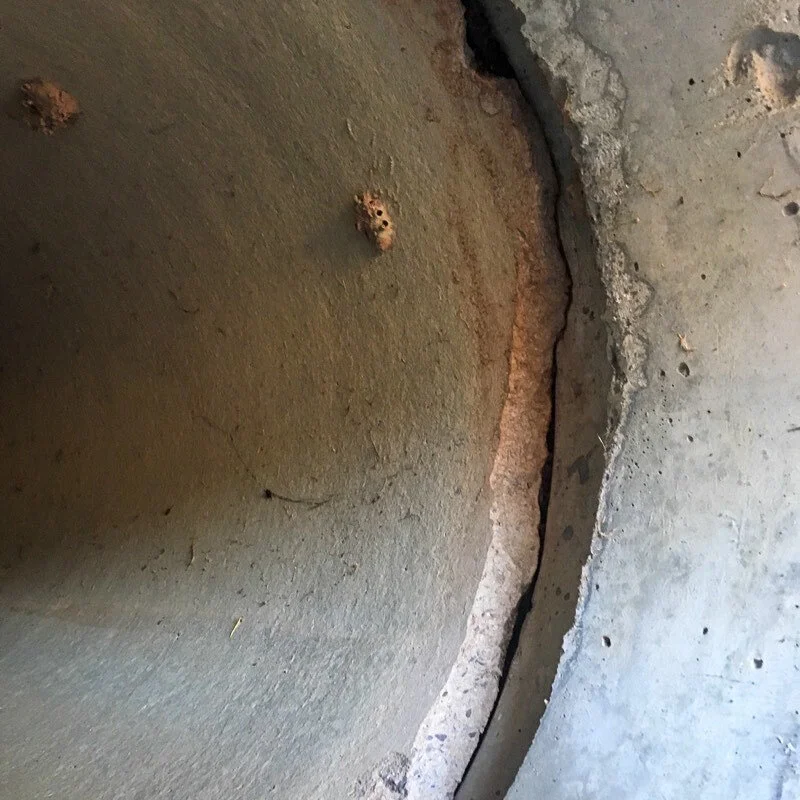
This is an example of a cracked stormwater pipe. This crack was discovered during a routine maintenance check of all system components, including assessing the interior of the inlet and outlet pipes. If not repaired, this crack will lead to above-ground issues.
Stormwater pipe failures are frequently overlooked because they occur underground and progress gradually. Many properties rely on visual-only inspections that focus on surface features, while landscaping, turf, or pavement conceal early warning signs. In some cases, general contractors or landscapers may notice symptoms but lack the stormwater expertise to diagnose the root cause.
Without stormwater-specific inspections, pipe failures may go undetected until a sinkhole, collapse, or flooding event forces emergency action.
Stormwater Pipe Repair Options
Repair strategies depend on the extent of damage, pipe material, and site conditions. In some cases, localized spot repairs can address isolated failures. More severe deterioration may require full pipe replacement or open-cut excavation to restore structural integrity and hydraulic capacity.
Temporary stabilization is often necessary when sinkholes form, followed by permanent repair that includes proper backfill, compaction, and surface restoration. The goal is not just to “fix the hole,” but to ensure the repaired system functions as designed and prevents future failures.
Selecting the correct repair method requires technical evaluation and experience with stormwater systems, not just excavation work.
Why Stormwater Pipe Repairs Require a Qualified Stormwater Contractor
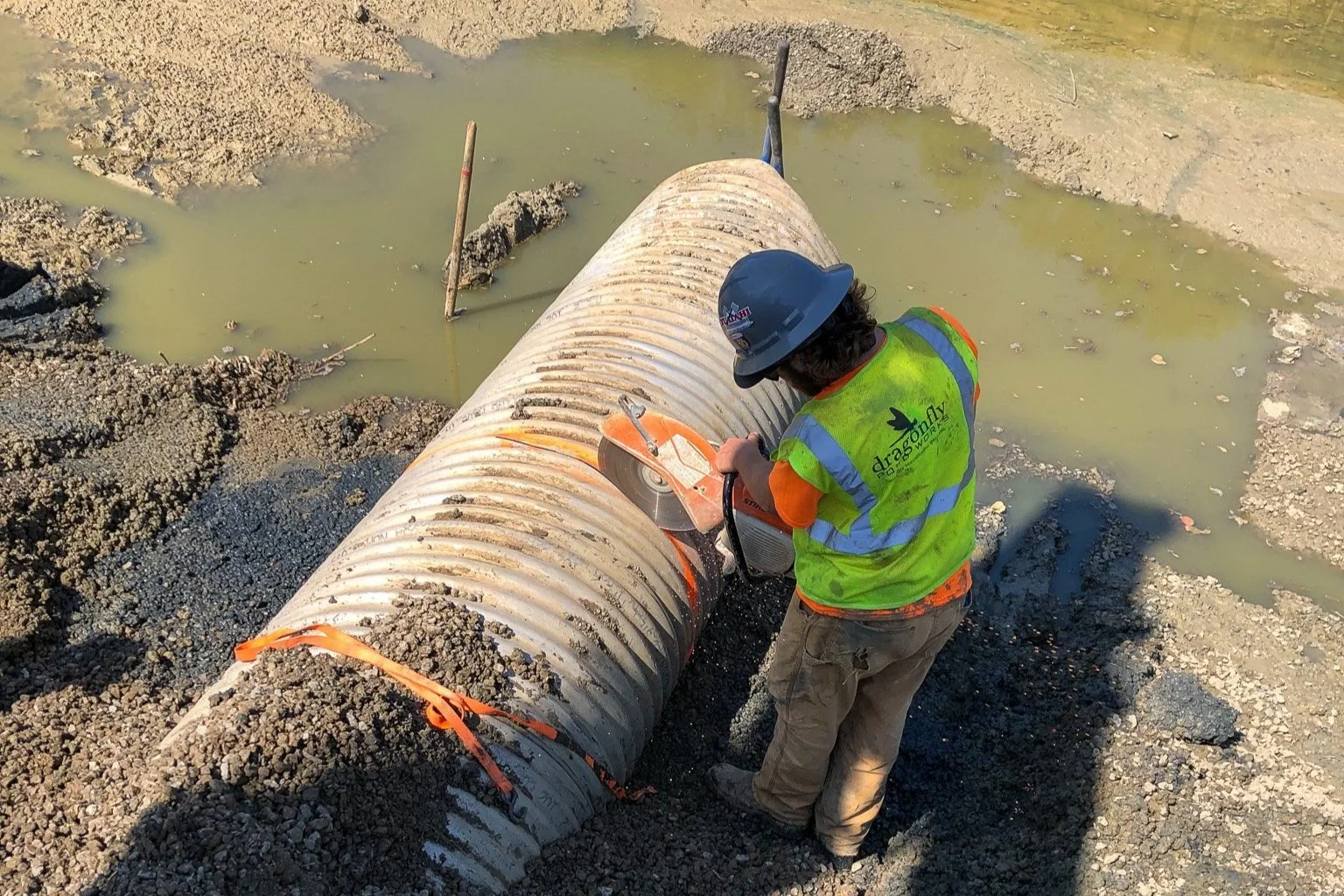
Stormwater pipe repairs differ significantly from standard utility or landscaping work. Improper repairs can restrict flow, alter drainage patterns, or create new failure points that lead to repeat sinkholes. Qualified stormwater contractors understand hydraulic requirements, soil behavior, regulatory expectations, and how pipe systems interact with ponds and other stormwater devices.
Correct repairs protect long-term system performance, reduce the risk of future failures, and help properties remain compliant with local and state stormwater regulations.
The Cost of Delaying Pipe Repairs
Delaying stormwater pipe repairs almost always increases costs. What begins as a manageable repair can escalate into emergency excavation, pavement replacement, pond damage, or structural stabilization. Emergency repairs are more disruptive, more expensive, and more likely to draw regulatory attention than planned, proactive maintenance.
Early detection and repair are the most effective ways to control costs and protect property value. Early detection is made possible by routine maintenance and inspections from a specialized stormwater management contractor.
How Dragonfly Pond Works Addresses Pipe Failures and Sinkholes
Dragonfly Pond Works has been an industry leader in stormwater management since 2006, and services HOAs, commercial properties, and municipalities throughout Nashville, Davidson County, Murfreesboro, and Franklin. Our team is certified to inspect, repair, install, and reconstruct all types of stormwater pipes and devices, including systems connected to dry ponds, retention ponds, bioretentions, and all other types of BMPs.
We specialize in identifying hidden failures, diagnosing root causes, and implementing durable, compliant repairs that restore system performance and reduce future risk. From early-stage inspections to complex pipe reconstruction, our approach is grounded in stormwater expertise, not temporary fixes.
Protect Your Property from Hidden Stormwater Failures
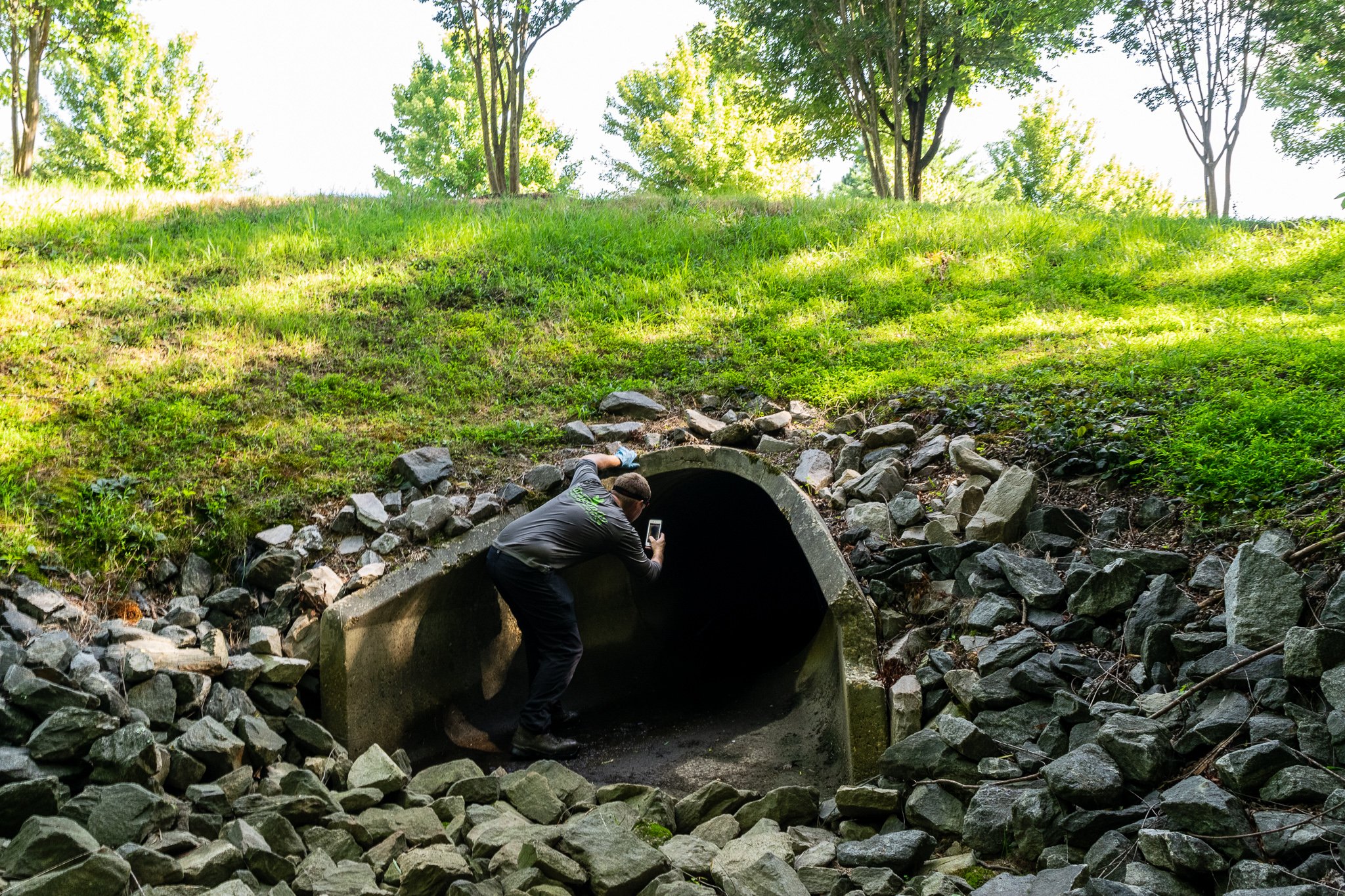
Stormwater pipe failures and sinkholes are not unavoidable. With proactive inspections, routine maintenance, early intervention, and qualified repairs, most issues can be addressed before they become emergencies. For property managers and HOA boards, taking action now protects residents or customers, reduces liability, and preserves long-term budgets.
If you suspect drainage issues, unexplained settlement, or potential pipe failures on your property, now is the time to act.
Contact Dragonfly Pond Works to schedule a professional stormwater pipe assessment and ensure your system remains safe, compliant, and prepared for Nashville and surrounding Middle Tennessee’s demanding weather conditions.
Stormwater Pipe Repair, Retention & Dry Pond Maintenance, Stormwater Compliance, & More
Learn about routine maintenance services for dry ponds and retention ponds for system health, compliance, and community aesthetics. Our experts explain the real world costs of neglecting proper stormwater pond maintenance in your Nashville HOA community.
Subscribe to our newsletter to receive informative and engaging news delivered right to your inbox.
Find us on Facebook, Twitter, Instagram, and LinkedIn for news, events, and more!
Dragonfly Pond Works provides specialized pond and stormwater management, compliance repairs, routine maintenance, and more in Nashville, Davidson County, Murfreesboro, Franklin, and Spring Hill, TN, Charlotte, Raleigh, Durham, Greensboro, and Wilmington, North Carolina, Charleston, Columbia, Myrtle Beach, and Greenville, South Carolina, Tampa, Sarasota, Naples, Fort Myers, Florida, Atlanta, Athens, Georgia, DC Metro, Fairfax, Northern Virginia, and Rockville, Gaithersburg, and surrounding Maryland.