Algae, Odors, and Murky Water: What Carolina Forest HOA Boards Need to Know
A green pond can be a warning sign. Is your Carolina Forest community board unsure how to respond?
Algae blooms, murky water, and foul odors are among the most common pond complaints HOA boards and community managers deal with across Carolina Forest, and they are also among the most misunderstood. Most boards treat them as aesthetic problems to be managed then reactively call someone when it gets bad enough, apply a treatment, and move on. That approach works until it doesn't, and in coastal South Carolina's climate, it usually stops working faster than expected.
What boards and community managers actually need is a clear understanding of why these problems occur, what they signal about the overall health of the pond, and what it takes to address them in a way that lasts longer than one treatment cycle. This article covers all three.
Why Carolina Forest HOA Ponds Are Especially Vulnerable
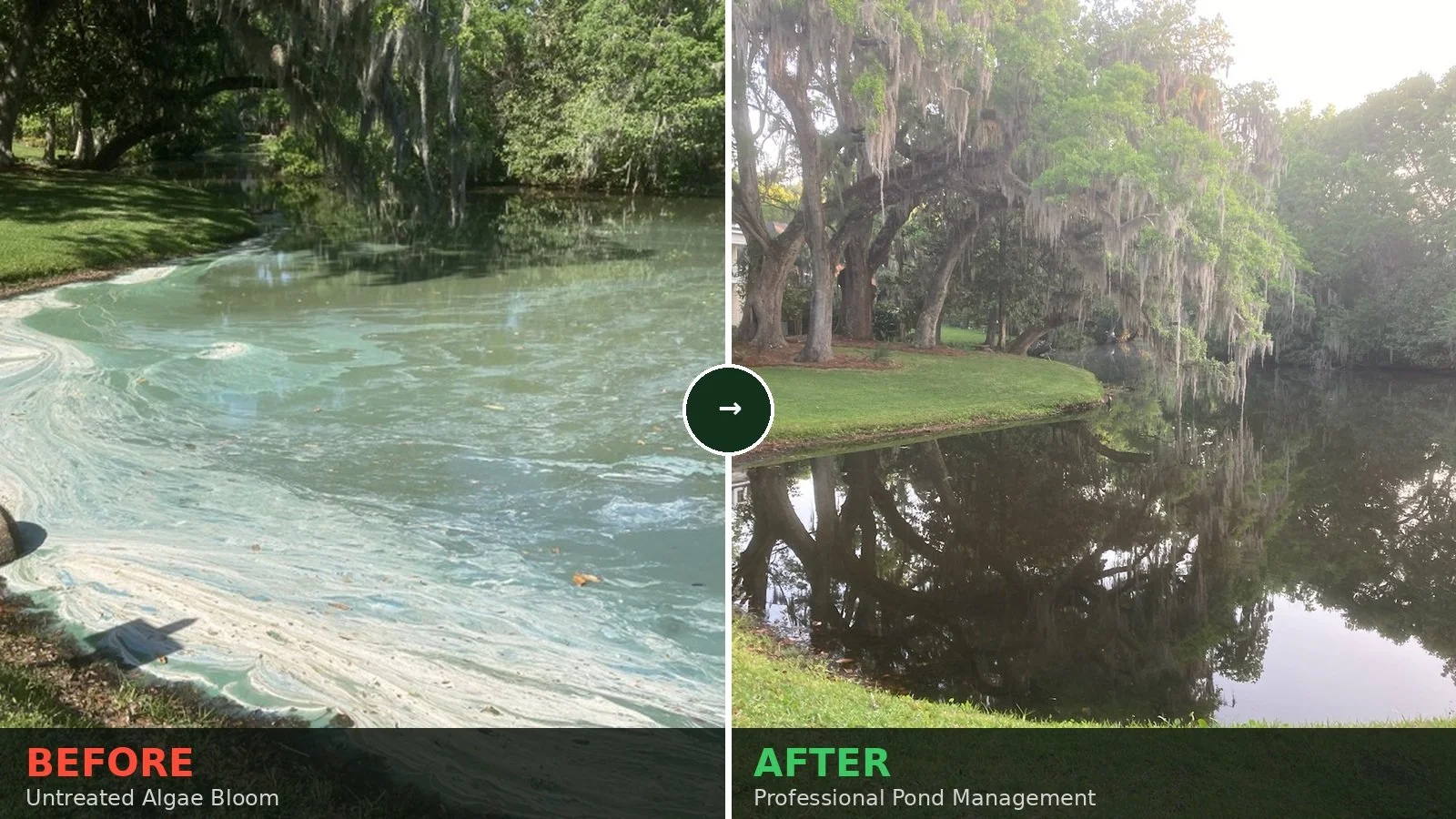
Before getting into the specifics it helps to understand why Carolina Forest ponds are particularly susceptible to algae blooms, murky water, and foul odors.
The stormwater ponds throughout communities like Covington Lake, The Farm, Avalon, Berkshire Forest, Waterford Plantation, and Plantation Lakes are engineered detention systems. Their primary purpose is to collect and hold stormwater runoff from nearby developed areas, such as roads, parking lots, rooftops, and lawns, and release it slowly into downstream waterways.
That runoff carries nutrients. Every lawn fertilization event, every rainfall across an impervious surface, every organic load from leaves and landscaping debris contributes phosphorus, nitrogen, and organic matter to the pond. In a natural lake with significant flow, those nutrients would be diluted and flushed. In a stormwater detention pond designed to hold water, they accumulate.
Add coastal South Carolina's climate, warm water temperatures from spring through fall, high humidity, and an extended growing season. All together you have conditions that are near-ideal for algae growth and aquatic weed proliferation. Runoff from landscaping and lawn care activities has been identified as a contributing cause of eutrophication in South Carolina coastal stormwater ponds, with research documenting over 200 harmful algal blooms in those systems between 2001 and 2005, with cyanobacteria being the dominant organism. That is not a new problem, and in developed communities like Carolina Forest, it is an ongoing one.
Algae: What You're Actually Seeing — and What It Means
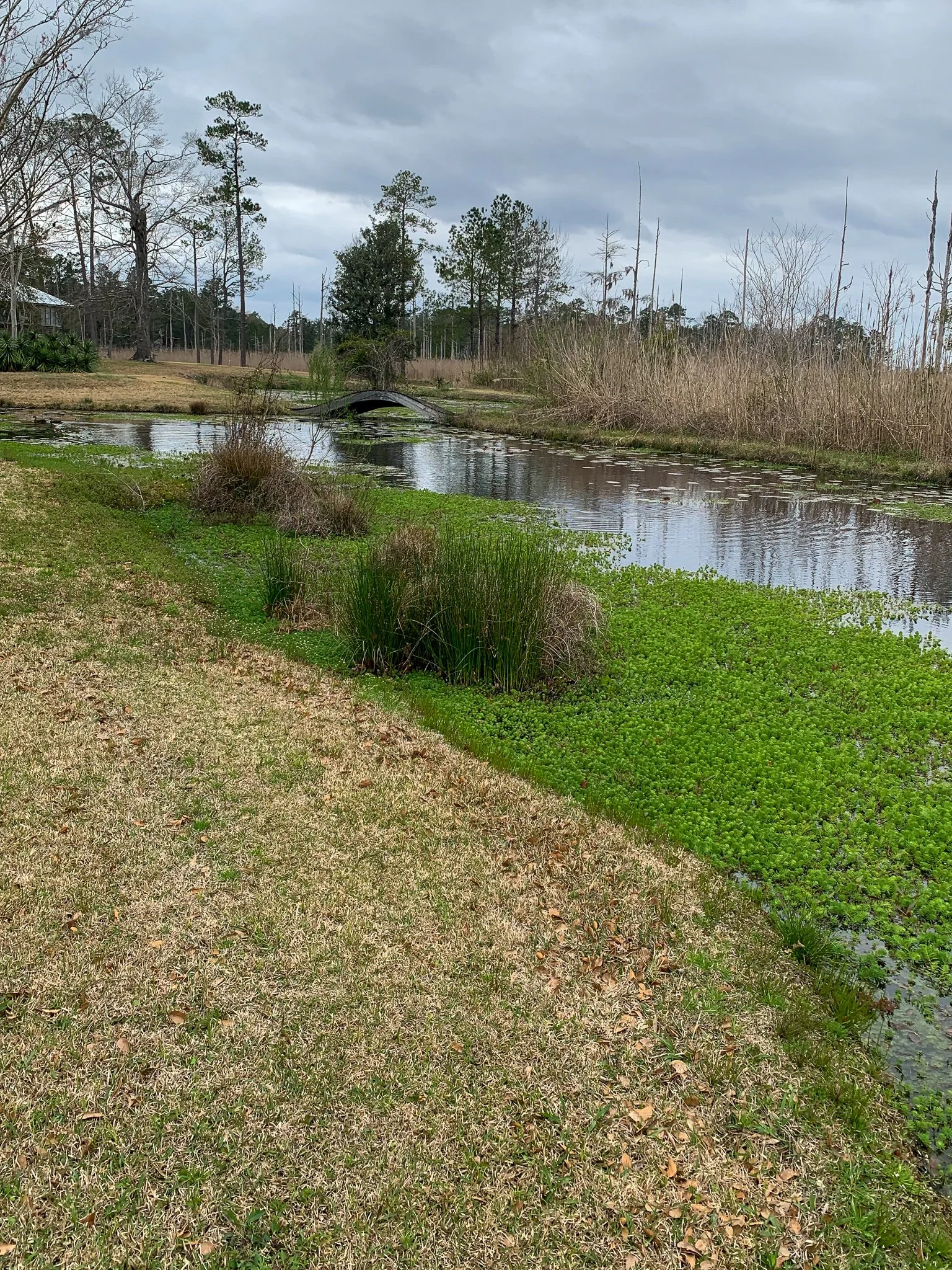
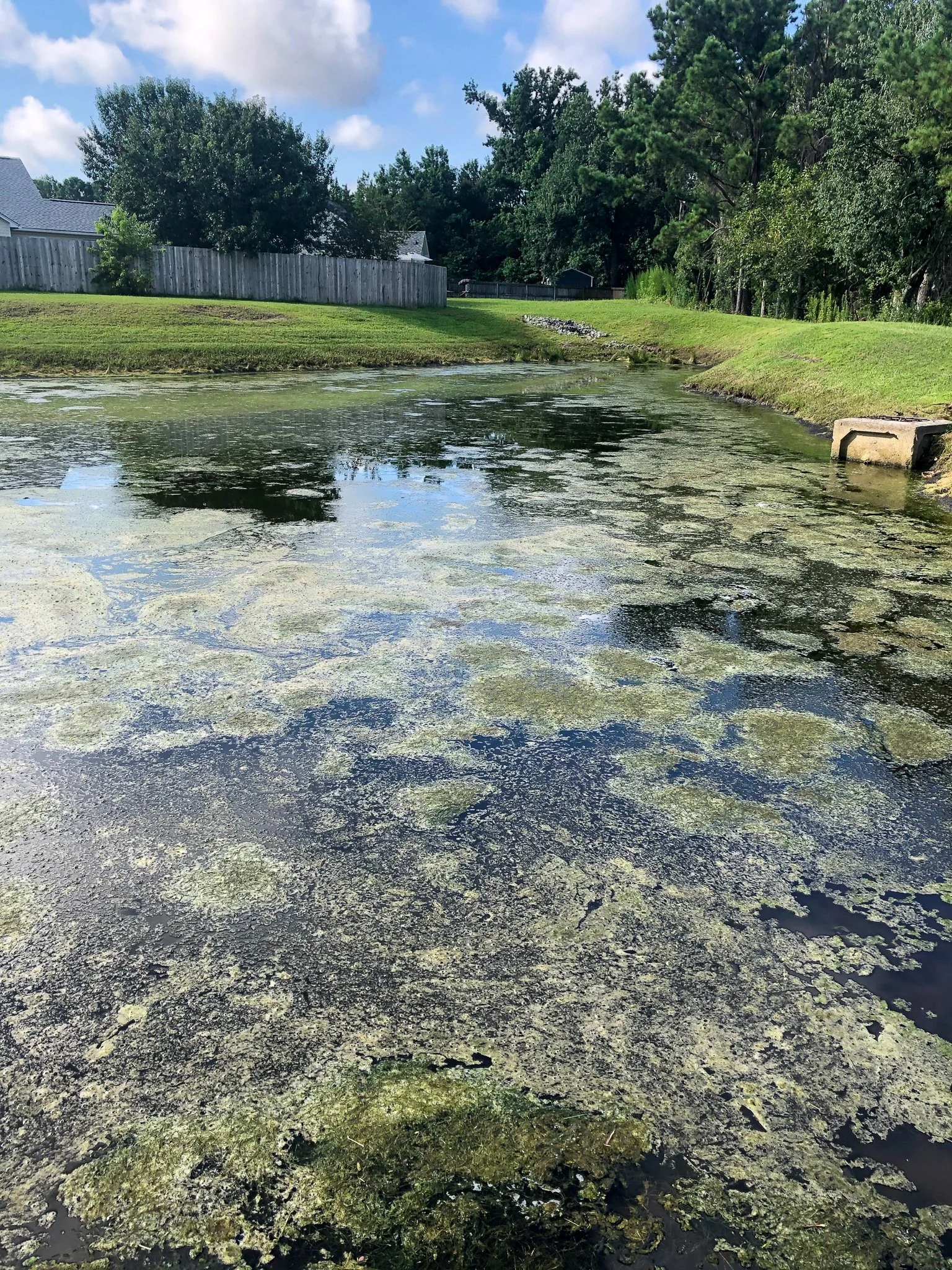
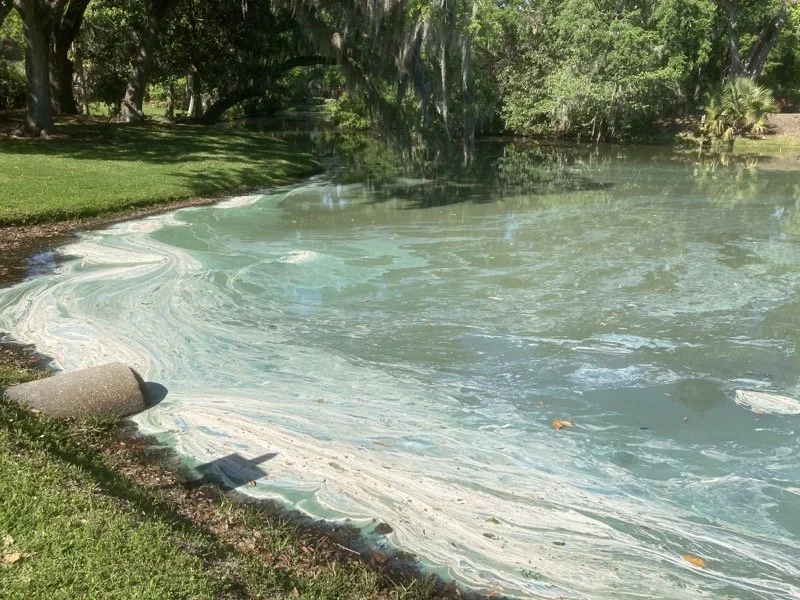
Not all algae are the same, and not all of them carry the same level of concern. Understanding the difference matters for both treatment decisions and resident communications.
Filamentous Algae
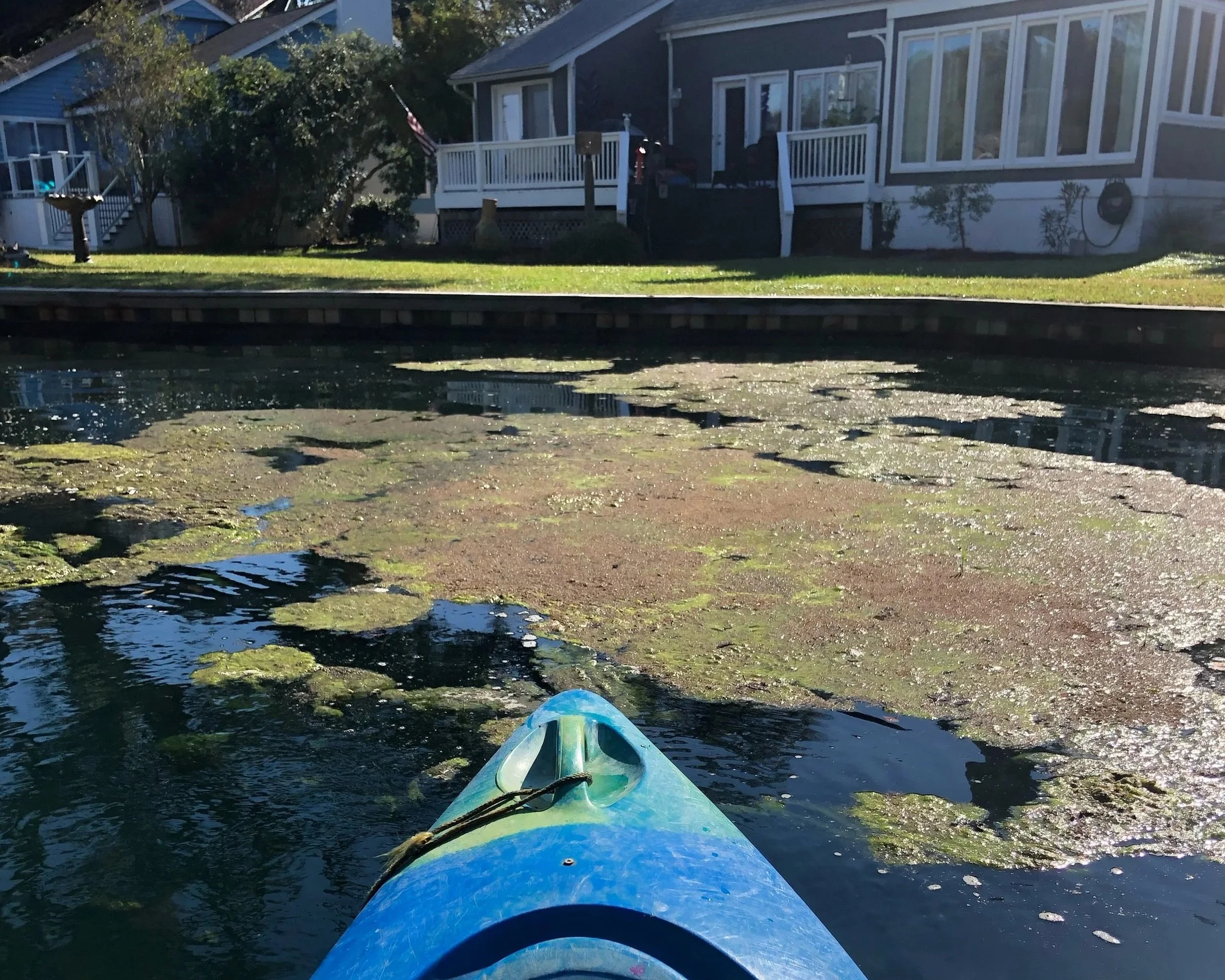
This is the stringy, mat-forming algae that accumulates along pond edges and in shallow areas. It can appear green, brown, or yellow, and it often forms visible floating mats on the surface. Filamentous algae is generally a nuisance. It is unsightly, it can clog inlet and outlet structures, and it signals elevated nutrient levels but it is not typically toxic.
Planktonic Algae
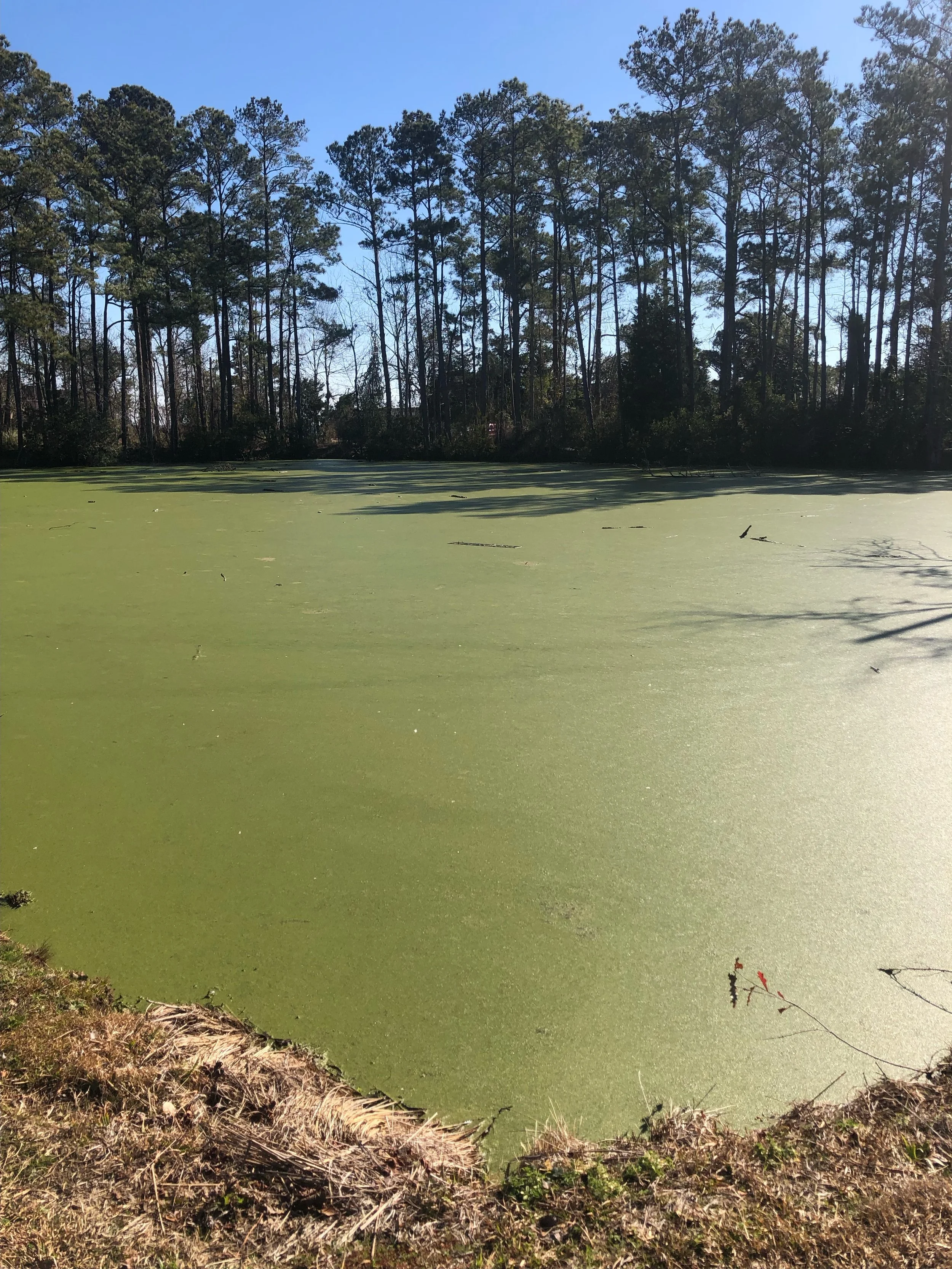
This is the suspended algae that gives pond water a green, pea-soup appearance. Dense planktonic algae blooms reduce water clarity, block sunlight to submerged vegetation, reduce dissolved oxygen as algae die and decompose, and can cause fish kills in severe cases. Like filamentous algae, it is a symptom of nutrient-loaded water.
Cyanobacteria — Blue-Green Algae
This is the category that warrants the most serious attention. Cyanobacteria, commonly called blue-green algae, are technically bacteria rather than true algae, but they behave similarly and are often mistaken for other algae types. What distinguishes them is their potential to produce toxins (cyanotoxins) that can cause health effects in people and animals through skin contact, ingestion, or inhalation of aerosols near affected water.
According to the South Carolina Department of Environmental Services, harmful algal blooms containing cyanobacteria are most likely to occur from late spring through early fall when water temperatures are elevated. Nutrient pollution can intensify these blooms, resulting in more frequent and more severe events. Blooms may appear as:
• Foam or surface scum
• Thick floating mats
• Bright green or blue-green discoloration of the water
Importantly, you cannot determine whether a bloom is harmful simply by looking at it.
For HOA boards managing community ponds where residents, children, and pets may be near or in contact with the water, the presence of a potential cyanobacteria bloom is not something to take a "wait-and-see" approach on. It requires professional assessment and, where warranted, treatment and resident notification.
Research on South Carolina coastal stormwater ponds has identified them as harmful algal bloom hotspots, with long-term monitoring linking dense phytoplankton blooms, including toxic species, to fish kills and other water quality events. Carolina Forest's stormwater ponds are not exempt from these dynamics. They operate within the same coastal environment and are subject to the same risk factors, including:
• Nutrient-rich stormwater runoff
• Warm seasonal water temperatures
• Nutrient accumulation within pond sediments
These conditions create an environment where harmful blooms can develop if nutrient inputs and overall pond health are not actively managed.
Pond Odors: Where They Come From and What They Tell You
Foul odors from a community pond are one of the most reliable indicators that something is wrong below the surface. They are also the complaint that generates the most resident pressure on HOA boards and the one that is hardest to ignore once it arrives.
The most common sources of pond odor in Carolina Forest communities are:
Algae Die-Off and Decomposition. When a large algae bloom crashes, either naturally or following a treatment, the decomposing organic matter consumes oxygen and produces hydrogen sulfide, the gas responsible for the characteristic rotten egg smell. A single treatment that kills a bloom without addressing the underlying nutrient conditions often leads to a repeat cycle: bloom, treatment, die-off, odor.
Low Dissolved Oxygen. Stagnant, stratified water with inadequate oxygen circulation creates anaerobic conditions at the pond bottom where organic sediment decomposes and produces odorous gases. This is particularly common in ponds without aeration systems and in communities where sediment has been accumulating over years without a dredging or cleanout program.
Excessive Organic Load. Leaves, grass clippings, and other landscape debris that regularly enters the pond add to the organic load at the bottom. As that material decomposes, it fuels both algae growth and odor-producing microbial activity. This is a direct connection between the surrounding landscape maintenance program and the pond's water quality.
In all three cases, the odor is a symptom, not the root problem. Treating the odor without addressing its source is a short-term fix that typically needs to be repeated.
Murky Water and Reduced Clarity
Murky, discolored water in a Carolina Forest HOA pond can have several causes, and identifying the right one matters for selecting the right response.
Algae and Planktonic Growth. The most common cause of green, pea-green, or brown-tinged water. High algae density reduces clarity and can give the water an opaque appearance even without a visible surface bloom.
Sediment Suspension. Ponds that have accumulated significant sediment, or that have eroding shorelines actively contributing soil to the water column, can maintain persistent turbidity that does not respond to algae treatment. If a pond stays murky even after an algae event resolves, sediment is often the culprit.
Tannins from Organic Debris. Decomposing leaves and organic matter leach tannins that stain water a brown or tea color. This is common in ponds surrounded by trees and is generally not harmful, though it can mask other water quality issues and contribute to resident concerns about pond appearance.
Loss of Littoral Vegetation. Healthy littoral plantings along the pond's edge play a significant role in filtering nutrients from incoming runoff before they reach open water. When those plantings are absent, poorly established, or have been removed, the pond loses a natural first line of defense against nutrient loading and the clarity problems that follow.
Too much plant material in and around a stormwater pond can cause significant problems including sedimentation, reduced volume, reduced residence time, stagnancy, noxious odors, obstructed pipes and outfalls, and impediments to maintenance equipment. The same is true in reverse too little vegetation along the shoreline removes the filtration function that helps keep nutrient loads manageable.
Why Reactive Treatment Alone Is Not a Long-Term Solution
One of the most common patterns Dragonfly Pond Works observes in communities new to professional pond management is the reactive treatment cycle: a problem becomes visible, a vendor is called, a treatment is applied, the problem temporarily improves, and the process repeats the following season. Often at greater cost and intensity than the year before.
This pattern is expensive, and it is not solving the underlying problem. Algae, odors, and water quality issues in Carolina Forest HOA ponds are typically the result of years of accumulated nutrient loading, organic matter deposition, and the absence of ongoing management to interrupt those processes. A single treatment addresses the symptom. A management program addresses the conditions that produce it.
Effective pond water quality management in this climate requires:
Routine Water Quality Monitoring. Scheduled inspections that track water conditions over time, identify developing problems before they reach the visible stage, and inform treatment decisions based on what is actually happening in the water. Not just what a property manager can see from the bank.
Customized Algae and Vegetation Treatment Programs. Treatment programs calibrated to each pond's specific conditions, the local growing season, and the types of algae and aquatic weeds present. South Carolina requires that anyone applying pesticides or herbicides to a water body hold a valid aquatic pesticide applicator license. Boards should verify that any vendor performing water treatments in their ponds holds appropriate licensure.
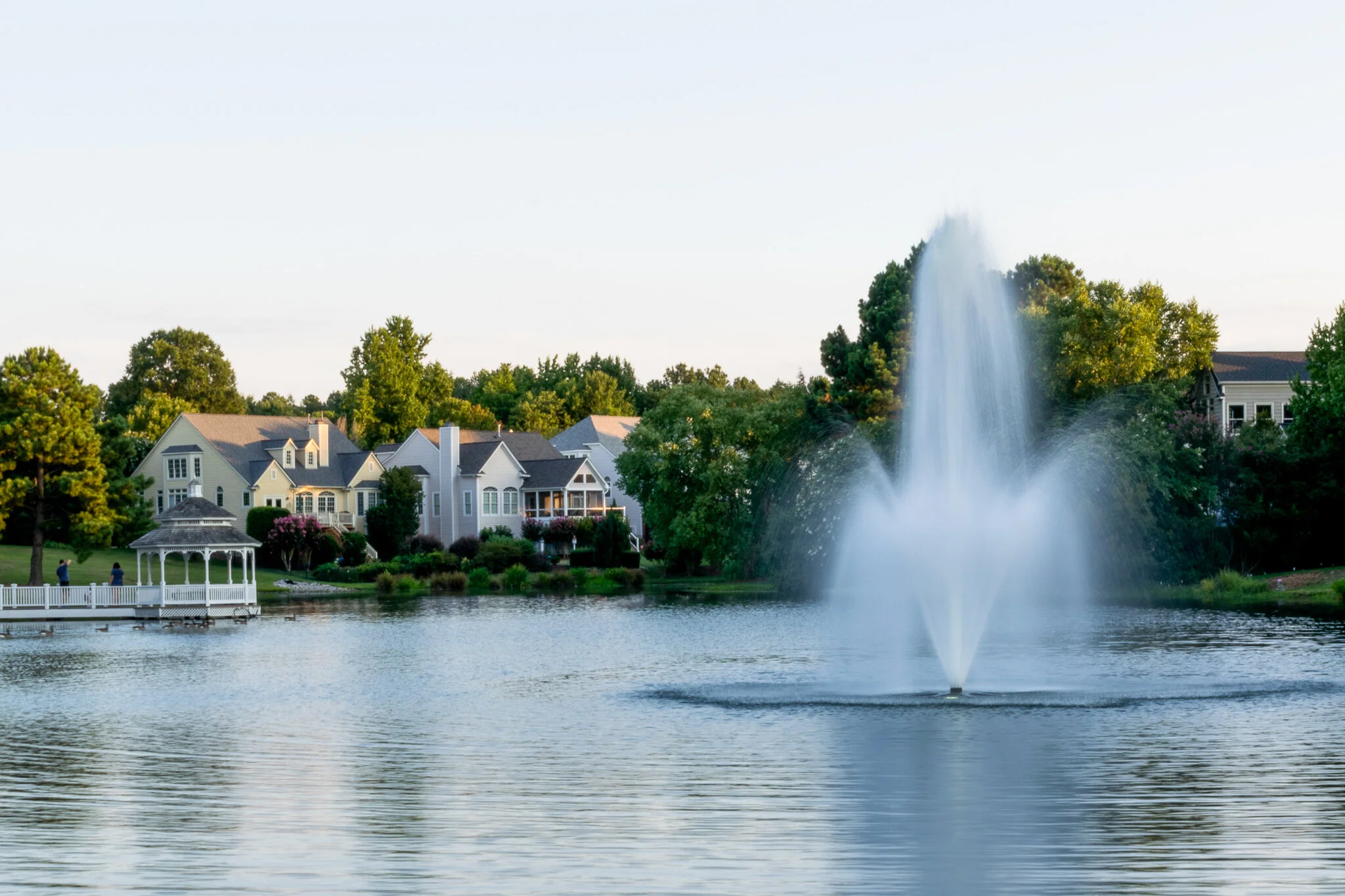
Aeration. Functioning aeration whether through a surface fountain, a submerged aerator, or a diffused system is one of the most effective tools available for reducing algae pressure. Aeration supports algae management by:
• Increasing dissolved oxygen throughout the water column
• Disrupting thermal stratification that can promote algae growth
• Improving overall water quality between treatment events
• Supporting a healthier and more balanced aquatic ecosystem
For ponds without aeration, installing a system should be considered a foundational investment in water quality management, not an optional upgrade.
Nutrient and Organic Load Reduction. Addressing the inputs that drive algae growth in the first place is a critical component of long-term pond management. This includes:
• Managing shoreline vegetation and littoral plantings to help filter incoming nutrient-rich runoff
• Minimizing the introduction of grass clippings, leaves, and other organic debris into the pond
• Reducing the accumulation of nutrients that fuel algae growth over time
• Evaluating whether dredging is warranted in ponds with significant sediment buildup to remove nutrient-rich organic material from the pond bottom
By reducing nutrient inputs at their source, pond owners can significantly decrease algae pressure and improve overall water quality.
What Carolina Forest HOA Boards Should Do Next
If your community's ponds are experiencing algae blooms, odors, or chronic water clarity issues, those problems are unlikely to resolve without a structured management response. The longer they go unaddressed, the more nutrient loading accumulates, the more sediment builds up, and the more intensive and expensive the treatment program required to correct them becomes.
The right starting point is a professional pond assessment that evaluates current water quality conditions, identifies the specific sources of the problems your ponds are experiencing, and provides a clear, actionable maintenance plan designed for your community's specific pond network.
Dragonfly Pond Works provides free pond assessments for Carolina Forest HOA communities. We walk your site, evaluate each pond and stormwater BMP, identify existing and developing issues. We deliver a plan tailored to what your ponds actually need, with no obligation.
Schedule Your Free Carolina Forest Pond Assessment →
Or contact us directly: Phone: 910-833-9764 Email: Info@dragonflypondworks.com
Dragonfly Pond Works provides full-service HOA pond maintenance, stormwater BMP management, algae and aquatic vegetation control, aeration installation, and pond repair and restoration services in Carolina Forest, Myrtle Beach, Charleston, and throughout coastal South Carolina. We work with HOA boards, community association managers, property management firms, golf course communities, and municipalities.
Related Reading
Why Carolina Forest HOA Ponds Need a Different Kind of Maintenance Plan
Stormwater Pond Maintenance: What Charleston Communities Get Right
Frequently Asked Questions: Pond Algae, Odors, and Water Quality in Carolina Forest
Why is my HOA pond turning green? A green pond is almost always the result of an algae bloom — most commonly planktonic algae suspended in the water column, which gives the water a pea-soup or green-tinted appearance. In Carolina Forest communities, this is driven by the combination of nutrient-rich stormwater runoff entering the pond from surrounding developed land and coastal South Carolina's warm temperatures and extended growing season. Phosphorus and nitrogen from lawn fertilization, organic debris, and impervious surface runoff accumulate in stormwater detention ponds that are designed to hold water rather than flush it. When those nutrient levels rise and water temperatures climb in late spring and summer, algae blooms are the predictable result. A pond that turns green once will turn green again without a management program that addresses the underlying nutrient conditions.
What is the difference between regular algae and blue-green algae in an HOA pond? Most algae found in community ponds — including the stringy filamentous algae along pond edges and the green planktonic algae that clouds the water — are nuisance problems that affect appearance and water quality but are not typically toxic. Blue-green algae, technically known as cyanobacteria, is different. Cyanobacteria are bacteria rather than true algae, but they behave similarly and are frequently mistaken for other algae types. What distinguishes them is their capacity to produce cyanotoxins — biological toxins that can cause health effects in people and animals through skin contact, ingestion, or inhalation of aerosols near affected water. Cyanobacteria blooms are most likely in South Carolina from late spring through early fall when water temperatures are high. They can appear as foam, scum, bright green or blue-green surface mats, or as streaks and discoloration in the water. You cannot reliably determine whether a bloom is cyanobacteria — or whether a cyanobacteria bloom is producing toxins — just by looking at it. Any suspected cyanobacteria bloom in a community pond where residents, children, or pets may have contact with the water warrants professional assessment and, where indicated, treatment and resident notification.
Why does my HOA pond smell like rotten eggs? The rotten egg odor coming from a community pond is hydrogen sulfide gas — a byproduct of anaerobic decomposition at the pond bottom. It occurs when organic matter (decaying algae, leaves, grass clippings, and other debris) decomposes in the absence of adequate dissolved oxygen. Stagnant, stratified water with no aeration is particularly prone to anaerobic conditions at depth, especially in warm weather. The same odor can also follow an algae bloom treatment: when a large bloom crashes, the decomposing organic matter consumes oxygen rapidly and produces hydrogen sulfide in significant quantities. In all cases, the odor is a symptom — not the underlying problem. Treating the smell without addressing the dissolved oxygen deficit, the organic load, or the sediment accumulation that drives it will produce a temporary improvement followed by recurrence. Aeration and a structured water quality management program are the durable solutions.
What causes murky or cloudy water in a Carolina Forest HOA pond? Murky water in a community pond has several possible causes, and identifying the right one determines the right response. The most common cause is planktonic algae — dense suspended algae that clouds the water and reduces clarity even when no surface bloom is visible. A second cause is sediment suspension: ponds with significant sediment accumulation at the bottom, or with actively eroding shorelines contributing soil to the water column, can maintain persistent turbidity that does not resolve with algae treatment. If your pond stays murky after an algae event clears, sediment is likely the issue and warrants a professional assessment. A third cause is tannins — natural compounds leached from decomposing leaves and organic debris that stain water a brown or tea color. Tannin discoloration is generally not harmful but can mask other water quality issues and contribute to resident concerns. Each cause requires a different response, which is why visual observation from the bank is an unreliable basis for treatment decisions.
Is it safe for residents, children, or pets to be near a pond that has algae in it? It depends on the type of algae present. Filamentous and planktonic algae are nuisance organisms that affect water quality and appearance but are not typically a direct health hazard from brief incidental contact. Cyanobacteria — blue-green algae — is the exception. Cyanobacteria blooms can produce toxins that cause skin irritation, gastrointestinal illness, and more serious effects in animals and children who ingest or have prolonged contact with affected water. Pets, particularly dogs that swim in or drink from ponds, are especially vulnerable. The challenge is that cyanobacteria blooms cannot be reliably distinguished from non-toxic algae by appearance alone. If your community pond has a bloom that may be cyanobacteria — foam, scum, or bright green to blue-green surface discoloration — restricting resident and pet access until a professional assessment is completed is the appropriate precaution. HOA boards have a duty-of-care obligation to communicate known or suspected hazards to residents; a bloom that could be cyanobacteria meets that threshold.
Why does our pond have algae problems every summer even after we treat it? Recurring algae is the defining characteristic of reactive pond management in a nutrient-rich environment. A single treatment kills the active bloom — it does not reduce the phosphorus and nitrogen load that produced it, the sediment accumulation that releases additional nutrients back into the water column, or the thermal stratification that concentrates algae at the surface. When those underlying conditions remain unchanged, algae returns, typically at the same time of year and often with greater intensity than the prior season as nutrient loading continues to accumulate. Breaking that cycle requires a management program that addresses the conditions driving algae growth — routine water quality monitoring, customized treatment programs timed to the local growing season, functioning aeration to disrupt stratification and convert excess nutrients to non-algae-sustaining forms, and, where warranted, shoreline vegetation management and sediment reduction to address the nutrient inputs at their source.
Does South Carolina require a license to treat algae in HOA ponds? Yes. South Carolina requires anyone applying pesticides or herbicides to a water body — including algaecides used to treat pond algae and aquatic herbicides used for aquatic weed control — to hold a valid aquatic pesticide applicator license issued through Clemson University's Regulatory Services. HOA boards and community managers should verify that any vendor performing chemical water treatments in their ponds holds current, valid South Carolina aquatic pesticide applicator licensure before authorizing work. Unlicensed chemical application in water bodies is a regulatory violation and may expose the HOA to liability. Dragonfly Pond Works holds the appropriate licensing for aquatic treatment services in South Carolina.