Why Carolina Forest HOA Ponds Need a Different Kind of Maintenance Plan
Is your HOA responsible for the ponds in your Carolina Forest community, and do you have a maintenance plan that actually meets that responsibility?
For many HOA boards and community managers across Carolina Forest, the honest answer is: not entirely sure. The ponds woven throughout neighborhoods like Covington Lake, The Farm, Waterford Plantation, Berkshire Forest, and Plantation Lakes are easy to take for granted when the water looks clear. But these aren't decorative features. They are engineered stormwater systems which are regulated infrastructure that your HOA is legally responsible for maintaining under a recorded Permanent Maintenance Covenant with Horry County.
And in coastal South Carolina's climate, "maintenance" means something more demanding than mowing the banks and hoping for the best.
The Grand Strand's heat, humidity, and extended growing season create conditions where algae blooms can develop in weeks, aquatic weeds can overtake a littoral shelf in a single season, and a stormwater pond that looked fine in April can generate a queue of resident complaints by July. When that happens, it usually isn't a maintenance problem that appeared overnight, it's one that developed quietly over time, without a plan in place to catch it early.
This article explains what makes Carolina Forest stormwater ponds different from the ponds your landscaper is used to managing, why a purpose-built maintenance plan matters, and what HOA boards and community managers should expect from one.
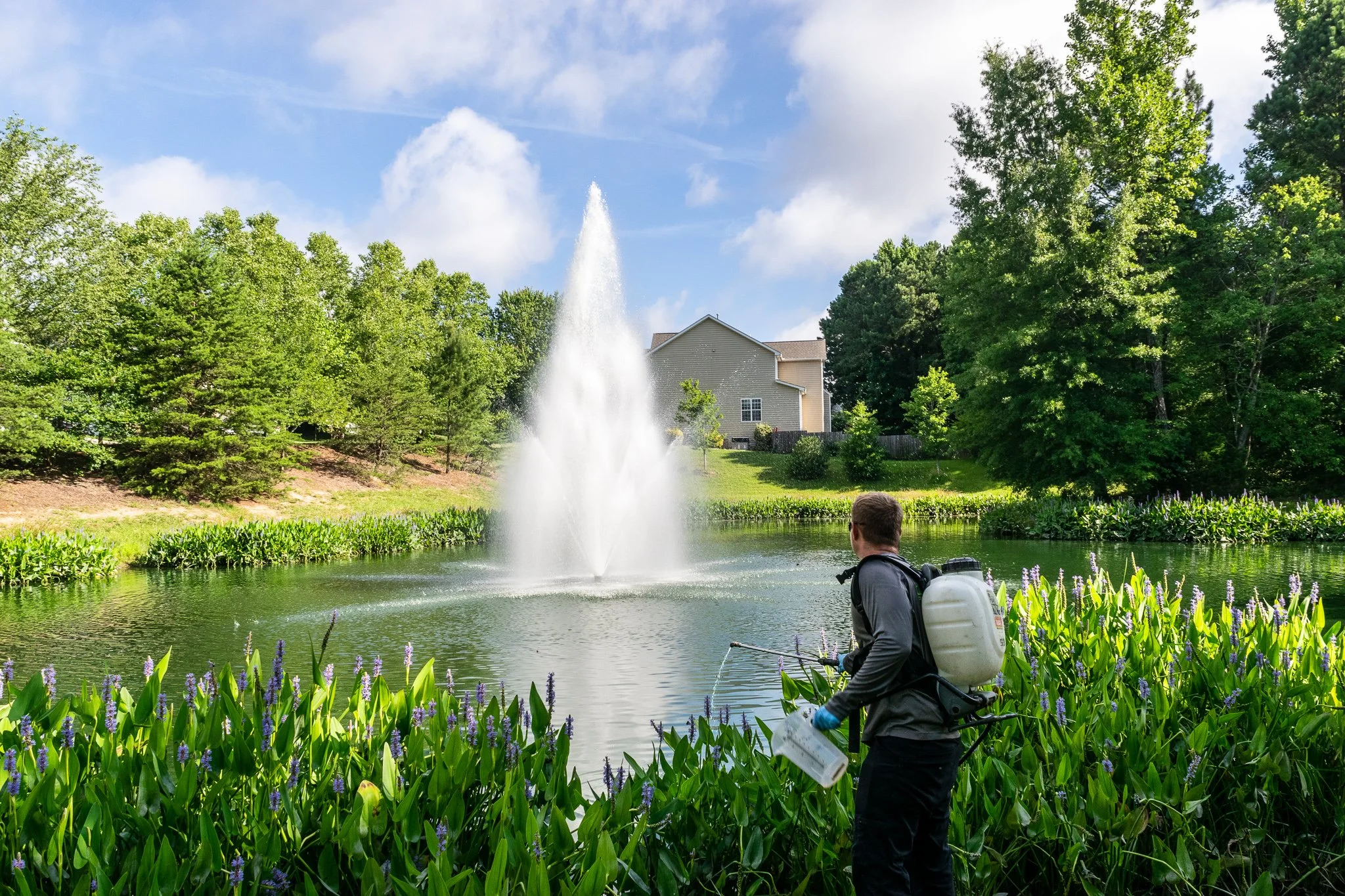
Carolina Forest is one of the fastest growing master planned communities in South Carolina. A 9,000-plus-acre area stretching between Myrtle Beach and Conway. It is home to more than 35,000 residents across dozens of distinct neighborhoods. Its lakes, ponds, and water features are part of what makes communities like Covington Lake, The Farm, Avalon, Waterford Plantation, Plantation Lakes, Berkshire Forest, and Waterbridge so attractive to homebuyers. But those water bodies are not decorative amenities. They are engineered stormwater infrastructure, and they come with responsibilities that most HOA boards didn't fully anticipate when they took their seats.
The maintenance plan that works for a small decorative pond outside a retail center is not the maintenance plan Carolina Forest communities need. Understanding the difference isn't just an operational detail. It's a financial one.
What Makes Carolina Forest Ponds Different
They Are Engineered Stormwater Systems, Not Ornamental Features
The ponds and lakes woven throughout Carolina Forest neighborhoods were not put there for aesthetics, though they certainly add to it. They are engineered Best Management Practices (BMPs): wet detention ponds, retention basins, detention ponds, bioretention areas, and interconnected drainage systems designed to capture stormwater runoff, reduce peak flows, filter pollutants, and protect downstream waterways from the impact of development.
In Horry County, homeowners associations (HOAs) are required to record Permanent Maintenance Covenants as part of the stormwater permitting process. These covenants make the HOA legally responsible for maintaining the community's stormwater management system.
Stormwater facilities covered under these agreements typically include:
Retention and detention ponds
Outlet control structures
Drainage pipes
Swales and drainage channels
Other stormwater infrastructure
The goal is to ensure these systems continue functioning properly and protect surrounding properties from flooding and water quality issues. These maintenance responsibilities do not change when board members rotate off the HOA board. The obligation remains with the association and runs with the property for the life of the community.
According to Horry County, the vast majority of the 1,500 to 1,600 stormwater ponds in the county are privately owned by HOAs, businesses, or individual property owners. The county maintains public drainage infrastructure. Your ponds are your responsibility.
The Coastal South Carolina Climate Creates Year-Round Pressure
The Grand Strand's climate is beautiful for residents and brutal for ponds. Hot summers, high humidity, warm water temperatures, and a growing season that extends well beyond what most of the country experiences create near ideal conditions for algae blooms, aquatic weed growth, and rapid vegetation encroachment.
South Carolina's coastal region receives significant rainfall throughout the year.
In highly developed communities like Carolina Forest, large amounts of pavement, rooftops, and other impervious surfaces prevent rainwater from naturally soaking into the ground.
As a result, nearly all stormwater runoff flows directly into the community's pond network.
Every rainfall event carries nutrients and organic matter into ponds, including:
Phosphorus
Nitrogen
Organic debris
These nutrients act as fertilizer for algae growth. Combined with warm water temperatures, nutrient-rich conditions create an ideal environment for algae blooms. In the coastal Carolinas, these conditions typically persist from early spring through late fall.
What takes a full season to develop in a cooler climate can emerge in a matter of weeks in Horry County. Proactive, season-aware management isn't a premium service option here. It's the baseline requirement for staying ahead of the problems.
Carolina Forest Manages Pond Networks, Not Individual Ponds
Many Carolina Forest communities don't manage one pond, they manage a network of interconnected water bodies. Each with different surface areas, depths, sun exposures, vegetation profiles, drainage loads, and maintenance histories. Plantation Lakes, for example, is wrapped around 170 acres of lakes and ponds. Berkshire Forest includes a 32-acre lake as its centerpiece. The Farm, Covington Lake, Avalon, and Waterford Plantation each encompass multiple water features spread across large, complex communities.
A maintenance approach that treats every pond identically: same treatment, same schedule, same scope. Is not a plan, it is a guess. And in a pond network, an untreated problem in one water body can migrate downstream to the next.
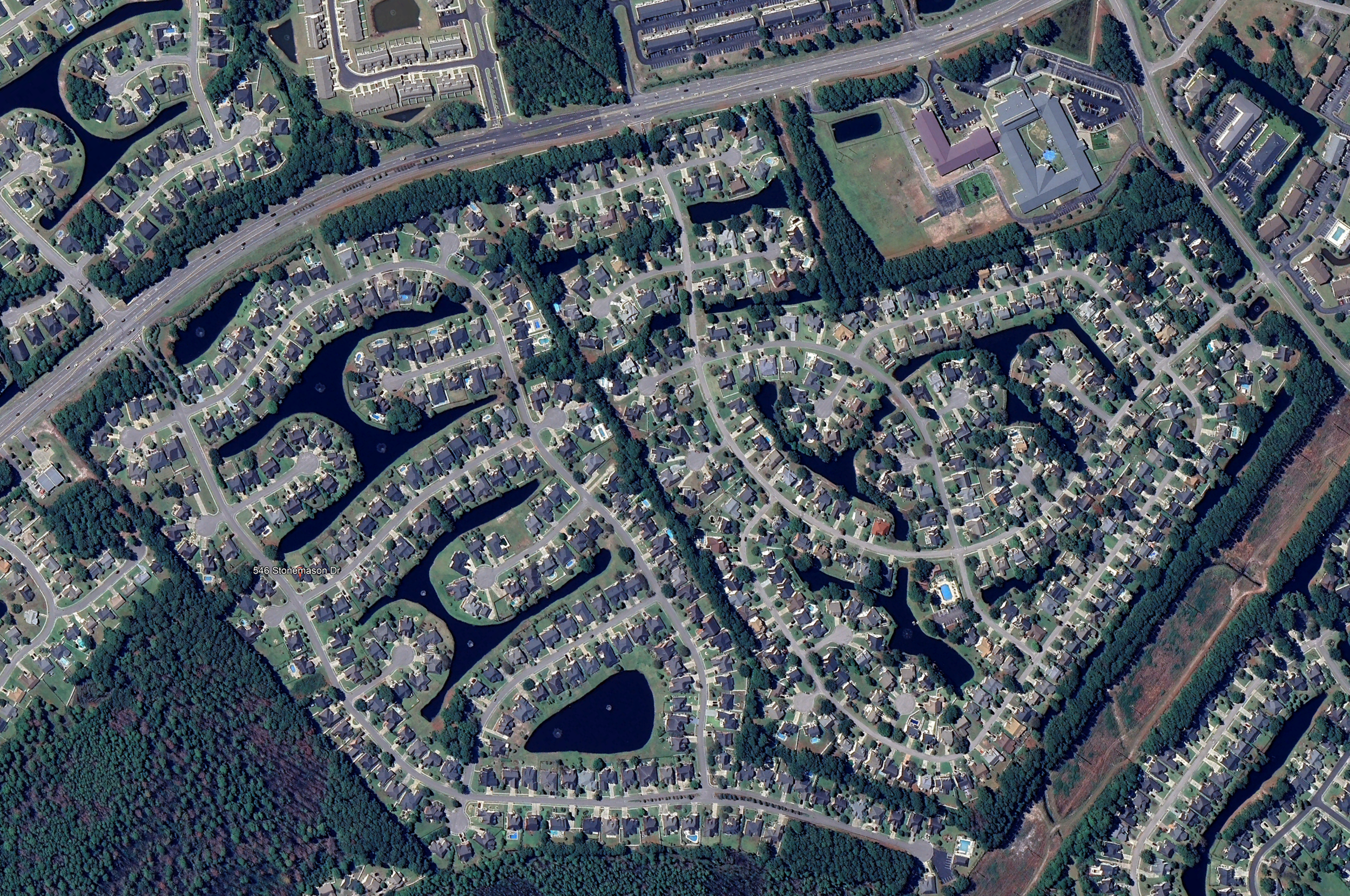
South Carolina community with interconnected ponds.
Why Generic Maintenance Falls Short
Landscapers Mow the Banks. They Don't Manage the Water.
This is the most common gap in community pond programs. Routine mowing and bank trimming are visible, measurable, and easy to budget. They are also insufficient on their own. A mowed shoreline does not address algae growing on the surface. It does not treat the aquatic weeds establishing along the littoral shelf. It does not flag a deteriorating outlet structure or a section of bank that is beginning to erode. And it certainly does not include water quality monitoring.
A mowed pond that is ecologically declining is not a maintained pond. It's a liability with a clean edge.
Reactive Maintenance Always Costs More
Deferred pond maintenance follows a predictable and expensive escalation path. Untreated algae leads to water quality decline. Water quality decline leads to odor and clarity complaints. Complaints lead to emergency treatment calls. Emergency treatment addresses the symptom but not the cause. The next season, the cycle repeats at higher cost, with more visible damage, and with more pressure on the board.
A scheduled, proactive maintenance program including routine inspections, seasonal water quality management, timely vegetation control, aeration upkeep. This interrupts that cycle before it starts. It is not just better for the pond. It is better for the budget.
Compliance Is Not Optional — Even in Coastal SC
Horry County's stormwater enforcement posture is less aggressive than some other jurisdictions, and stormwater regulations along the coastal South Carolina region are still evolving. But the underlying legal obligation is not optional. HOAs in Horry County are bound by recorded stormwater maintenance covenants that require ponds and BMPs to be kept in good working condition. Horry County's own guidance recommends semi-annual self-inspections of all stormwater infrastructure, as well as inspections before and after major storm events.
A pond that cannot perform its stormwater function because of excessive sediment accumulation, clogged inlet and outlet structures, uncontrolled vegetation, or structural deterioration is a liability for the HOA regardless of whether an enforcement notice has been issued. The question is not whether the obligation exists. It is whether the board is meeting it.
One Maintenance Plan Cannot Fit a Pond Network
A single treatment schedule applied uniformly across five interconnected ponds with different characteristics is not pond management. It is an approximation. Effective community pond maintenance requires a site-specific assessment of each water body in its current condition, its primary challenges, its relationship to adjacent ponds in the drainage network, and its role in the overall stormwater system. Without that foundation, maintenance decisions are reactive by default.
What a Purpose-Built Maintenance Plan Looks Like
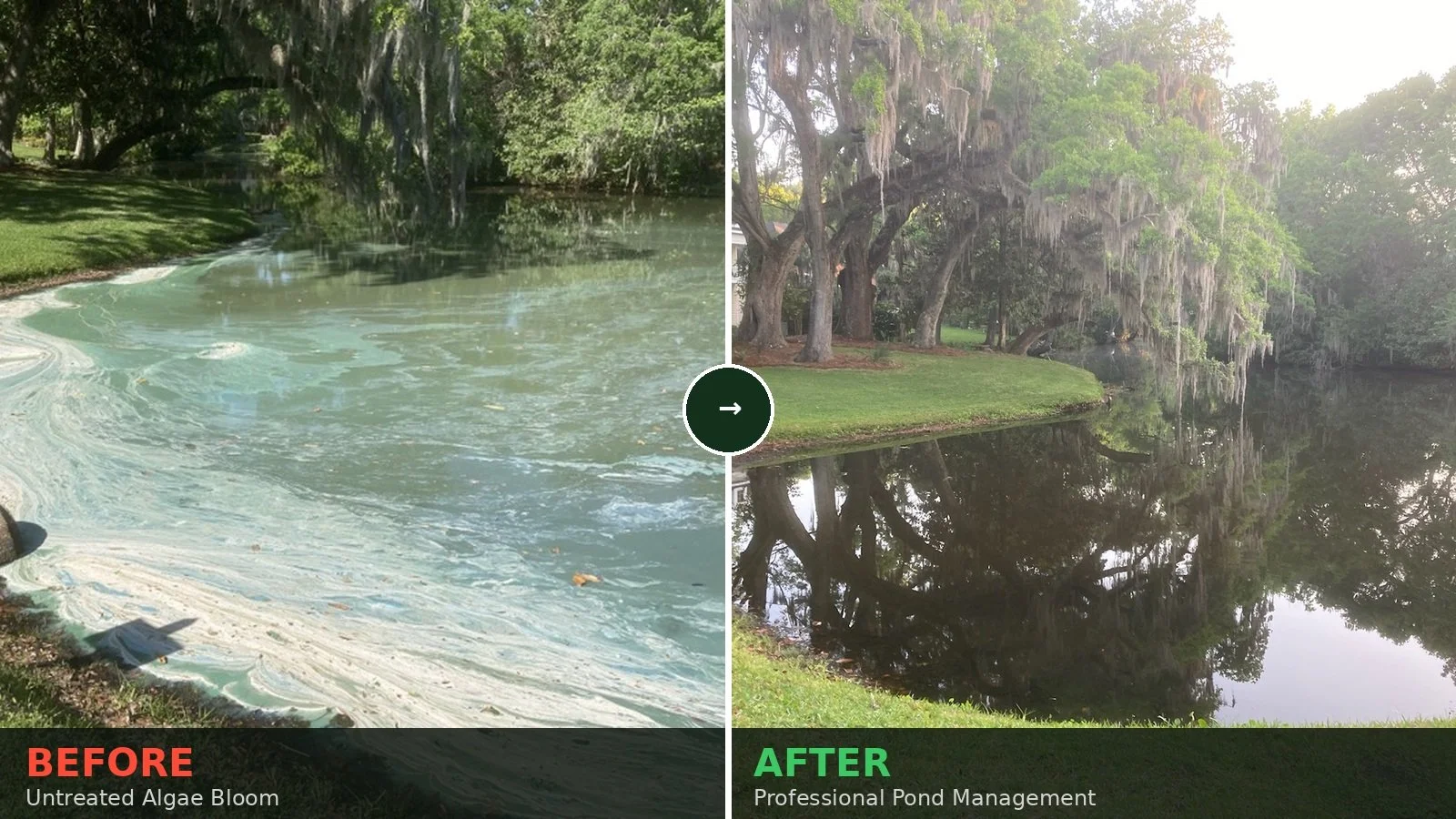
This is an example of a potentially toxic cyanobacteria bloom at a South Carolina community that Team Dragonfly treated.
The right pond management program for a Carolina Forest community starts before a single treatment is applied. It starts with a qualified team walking the site. Evaluating every pond and stormwater BMP, documenting existing conditions, identifying active problems, and building a maintenance schedule tailored to that specific community's water bodies, not a template copied from another project.
From that foundation, a full-service program includes:
Routine Inspections and Water Quality Monitoring. Ongoing monitoring, not just periodic visits, is what allows problems to be caught at the treatment stage rather than the repair stage. Scheduled service visits, water quality checks, and detailed documentation give HOA boards a clear, defensible record of their pond's condition over time.
Algae Control and Aquatic Vegetation Management. In the Carolina Forest climate, this is not a once-a-season application. Customized treatment programs adjusted for each pond's conditions, calibrated to South Carolina's growing season, and responsive to what is actually happening in the water are the standard. Not a default herbicide on a fixed schedule.
Aeration and Fountain Maintenance. For communities where fountains and aerators are part of the landscape, these systems require their own maintenance program. Functioning aeration is also one of the most effective tools available for improving water quality, particularly during peak algae season, by increasing dissolved oxygen and disrupting the thermal stratification that algae thrive in.
Aquatic Planting and Shoreline Stabilization. Native littoral plantings along the pond's edge help filter nutrients before they reach open water, stabilize the shoreline against erosion, and improve the pond's ecological function. In communities where aesthetics matter as much as function, well-executed littoral plantings also enhance the visual quality of the water feature.
Repair and Restoration Capabilities. Routine maintenance will eventually reveal structural issues Including shoreline erosion, sediment accumulation, failing drainage structures, sinkhole indicators. A full-service pond management partner handles those repairs directly, without requiring the HOA to source a separate contractor, manage two vendor relationships, and coordinate between them.
The Real Stakes for Carolina Forest HOA Boards
The condition of your community's ponds is one of the most visible indicators of how well the community is managed. A clean, clear, well-maintained pond at the entrance to a neighborhood communicates something specific to every prospective buyer, every current resident, and every board member driving past it. So does a green, odorous one.
Beyond aesthetics, HOA board members have a financial duty to maintain community assets. Stormwater ponds are assets engineered infrastructure with real maintenance obligations attached to them. Deferred maintenance on that infrastructure creates liability exposure for the association, escalating repair costs as problems compound, and a complaint queue that is difficult to get ahead of once it starts.
A proactive, professionally managed pond program does not just improve the water. It reduces emergency costs, gives community managers one less crisis to manage, and allows board members to demonstrate clearly and specifically that they are meeting their obligations to the community.
Start With a Free Pond Assessment
If your Carolina Forest community's ponds don't have a purpose-built maintenance plan, the right first step is understanding what you're actually working with.
Dragonfly Pond Works provides free pond assessments for Carolina Forest HOAs and community associations. We walk your site, evaluate your ponds and stormwater BMPs, identify current and developing issues, and provide a clear, actionable maintenance plan with no obligation.
Schedule Your Free Carolina Forest Pond Assessment →
Or contact us directly: Phone: 910-833-9764 Email: Info@dragonflypondworks.com
Dragonfly Pond Works provides full-service HOA pond maintenance, stormwater BMP management, and pond repair and restoration services in Carolina Forest, Myrtle Beach, and throughout coastal South Carolina. We work with HOA boards, community association managers, property management firms, golf course communities, and municipalities.
Related Reading
Stormwater Pond Maintenance: What Charleston Communities Get Right
Shoreline Restoration: Protecting HOA & Community Ponds from Erosion
Frequently Asked Questions: HOA Pond Maintenance in Carolina Forest
Who is responsible for maintaining HOA ponds in Carolina Forest? In Carolina Forest and throughout Horry County, the HOA or property owner is responsible for maintaining stormwater ponds — not the county. Horry County maintains public drainage infrastructure such as roads and public drainage systems, but the vast majority of the 1,500 to 1,600 stormwater ponds in the county are privately owned. When a development is permitted, the HOA must record a Permanent Maintenance Covenant with Horry County that legally binds the association to keeping all stormwater facilities — including ponds, outlet structures, pipes, and swales — in good working condition. That obligation transfers to each new board and does not expire.
How often should a Carolina Forest HOA inspect its stormwater ponds? Horry County recommends that HOAs conduct self-inspections of their stormwater ponds and drainage systems at minimum semi-annually — typically in spring and fall — and after any significant storm event. For communities managing multiple interconnected ponds, more frequent professional inspections are advisable, as problems in one water body can affect the performance of connected ponds downstream. A qualified pond management company will document each inspection and provide the HOA with a written record, which is valuable for both compliance purposes and long-term budget planning.
Why do HOA ponds in Carolina Forest get algae so quickly? Carolina Forest's coastal South Carolina climate creates conditions that are highly favorable for algae growth. Warm water temperatures, high humidity, and an extended growing season — combined with the high nutrient loads that enter ponds through stormwater runoff from developed, impervious surfaces — give algae everything it needs to establish and spread rapidly. Phosphorus, nitrogen, and organic material carried in by rainfall fuel blooms that can emerge in a matter of weeks during the warmer months. Without proactive water quality management and algae treatment programs calibrated to the local growing season, algae problems typically escalate faster than reactive maintenance can address them.
What is a stormwater BMP, and does my HOA have one? BMP stands for Best Management Practice — a category of engineered water management systems designed to capture stormwater runoff, reduce peak flow volumes, filter pollutants, and protect downstream waterways. In Carolina Forest, virtually every residential community built in the last three decades includes at least one stormwater BMP. Common types include wet detention ponds (the most prevalent type in the area), retention basins, detention ponds, bioretention areas, and underground drainage systems. If your community has a pond, lake, or any engineered drainage feature, it almost certainly qualifies as a BMP — and your HOA is responsible for maintaining it.
Can a landscaping company handle our HOA pond maintenance? General landscaping companies can mow the banks and trim vegetation around a pond, but that is not the same as managing the pond itself. Effective HOA pond maintenance requires water quality monitoring, customized algae and aquatic vegetation treatment programs, aeration system upkeep, inspection of structural components like inlet and outlet structures, and the ability to perform repairs when problems are identified. These services require specialized training, equipment, and licensing that general landscapers do not typically hold. Using a landscaper for bank mowing while leaving water quality, vegetation, and structural maintenance unaddressed is one of the most common causes of escalating pond problems in HOA communities.
What happens if an HOA neglects its stormwater ponds in Horry County? Neglected stormwater ponds follow a predictable decline: untreated algae leads to water quality deterioration, odors, and resident complaints; deferred vegetation management leads to overgrowth that undermines structural integrity; unaddressed sediment accumulation reduces pond storage capacity and stormwater performance; and ignored structural issues — deteriorating outlet structures, eroding shorelines, failing drainage components — escalate into costly repairs or full pond restoration projects. Beyond the operational costs, HOAs in Horry County are bound by recorded maintenance covenants and county stormwater regulations. A pond that cannot perform its designed stormwater function creates liability exposure for the association, regardless of whether a formal enforcement action has been initiated.
How do I get a pond maintenance plan for my Carolina Forest HOA? The best starting point is a professional site assessment. Dragonfly Pond Works provides free pond assessments for Carolina Forest HOA communities — we walk the site, evaluate every pond and stormwater BMP, identify existing and developing issues, and deliver a clear, actionable maintenance plan with no obligation. To schedule yours, visit ourCarolina Forest HOA Pond Maintenance page, call us at 910-833-9764, or email Info@dragonflypondworks.com.