
Riparian Buffer Management
The planted strip between dry land and open water is easy to overlook until invasive plants take it over or someone mows it to the edge. We manage riparian buffers by removing what does not belong and keeping the native plants that filter runoff and hold the bank.
Branch Locations:
Raleigh-Durham, Charlotte, Winston-Salem / Greensboro, Wilmington, Myrtle Beach, Charleston, Greenville-Spartanburg, Atlanta, Savannah, Orlando, Tampa, Virginia Beach, Fairfax, Montgomery County, Lewes, Chicago, Houston, Dallas-Fort Worth, San Marcos Corridor, Nashville
Have a multi-site footprint? Learn how we can work with you
Service DescriptioN
About Our Riparian Buffer Management Service
Riparian buffer management is the care of the planted strip of land along a shoreline that filters runoff and holds the bank in place.
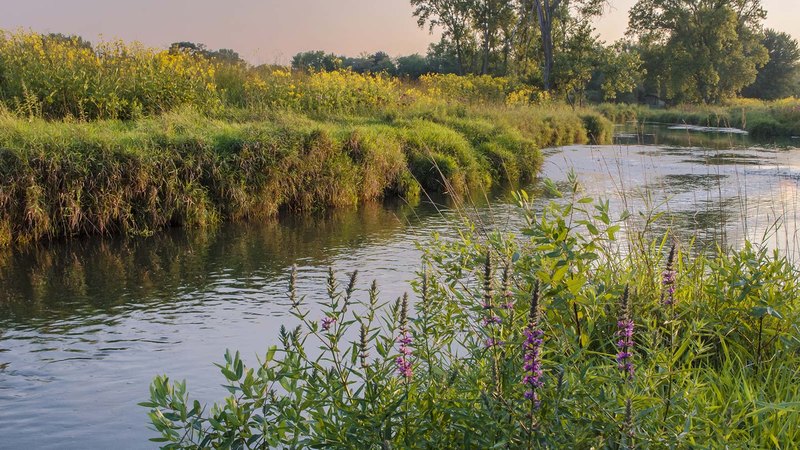
A riparian buffer is the transition zone between dry land and open water. When it is healthy, it slows water coming off the property, takes up nutrients, shades the shallows, and gives wildlife a place to feed and nest. When it is mowed to the edge or overtaken by invasive plants, it stops doing that work.
Dragonfly Pond Works assesses the strip, removes what does not belong, and manages the native plants that should be there. We plan the work around the waterbody, the wildlife, and the way the property is used.
A well managed shoreline buffer supports the health, function, aesthetic appeal, and value of the water it protects.
Key Benefits of Riparian Buffer Management
A Working Filter at the Water Edge
Dense native growth slows runoff and takes up nutrients before they reach the water.
A Bank That Stays Put
Deep roots hold soil along the edge and reduce erosion.
Habitat That Supports Wildlife
Birds, pollinators, and other wildlife use the planted edge for food and cover.
A Tidier, More Intentional Edge
Managed planting looks planned rather than overgrown, which residents and visitors notice.
Less Mowing and Less Upkeep
Native zones need far less mowing than turf at the water edge.
Control of Invasive Species
We remove invasive plants that crowd out native species and weaken the edge.
From The Field
Service Photos


How It Works
Assessment
We review the width of the planted strip, the species growing in it, and how well it is filtering runoff and holding the bank.
Setting the Goal
We agree on what the area should do, whether that is erosion control, habitat, appearance, or a balance of these.
Clearing and Preparation
We remove invasive plants and unwanted growth and prepare the ground for the species that belong there.
Planting and Establishment
We install native plants suited to each part of the buffer zone, from the water edge to the upper bank.
Ongoing Management
We return to manage growth, check establishment, and document each visit in a detailed photo report.
Why Riparian Buffer Management is Important
A riparian buffer is the last line of defense between the land and the water. When it is mowed short or overrun by invasive plants, runoff, nutrients, and soil go straight into the waterbody.
Managing that strip is one of the most cost effective ways to protect a shoreline and the water behind it. We prioritize practical stewardship, and we strive to leave every site better than we found it.
Riparian Buffer Management FAQs
Answers to our most common questions about this service. If you have a different question not answered here, get in touch.
Wider is generally better, but even a narrow planted strip makes a difference. Local rules may set a minimum width. We recommend a width that fits the site and its use.
Not when it is managed. We choose plants by height and form, keep clean edges and sight lines, and maintain views and access points.
Yes. Removing invasive species is a core part of the work, followed by planting natives to fill the space.
No. Many properties keep mowed access points and paths while letting the rest of the edge grow in.
Native plants begin filtering runoff in their first growing season and gain strength as their roots deepen over the following years.
Yes. We work with HOAs, municipalities, facility managers, and private landowners, and we share photo reports boards can pass along to community members.