
Dredging & Shoreline
Dredging removes the sediment that slowly fills a lake or pond, and shoreline work repairs and protects the banks around it. Together they restore depth, slow erosion, and protect the health, function, aesthetic appeal, and value of your waterbody.
Dredging, Shoreline, and Erosion Services
Our dredging and shoreline services restore ponds and lakes that have filled in or lost ground to erosion. We treat the waterbody and the banks around it as one connected system.
The result is deeper water, stable shorelines, and land that stays where it belongs. Owners protect their investment and avoid the higher cost of letting damage grow over time.




Why Clients Choose Dragonfly
Our programs and services connect field care, reporting, tracking and long-term planning so there is always a clear view of what comes next.
Proactive Monitoring
Routine site visits help the team spot and react to changing conditions early
Clear Documentation
Photo-backed updates ensure we track conditions over time.
Local Field Teams
Our experts and techs are local to the area and know the environment.
Full-Service Support
Maintenance, repair, restoration, and specialty work all in one place.
Use Cases For Each Service
Licensed, Certified, And Proven Across The Nation
Fully Licensed & Insured
Licensed aquatic applicators in all service states with commercial general liability and workers' compensation coverage. Applicator licenses renewed annually with continuing education requirements.
Industry Certifications
Certified Lake Managers (CLM) on staff through the North American Lake Management Society. Certified Aquatic Scientists and Fisheries Biologists provide technical oversight on complex projects.
Environmental Compliance
EPA-registered products applied according to federal and state regulations. Zero environmental violations or client fines since 2006. Full documentation and reporting.
National Coverage
Operating in North Carolina, South Carolina, Georgia, Tennessee, Virginia, Maryland, Delaware, Pennsylvania, New Jersey, and Texas with regional teams who understand their local areas.
Proven Track Record
Managing over 5,000 waterbodies for homeowner associations, commercial properties, municipalities, golf courses, and private clients. Long-term contracts with 80%+ client retention rate.
Safety Standards
OSHA-compliant safety training for all field technicians. Equipment properly maintained and calibrated. Detailed signage protocols after chemical applications to protect people and pets.
Dredging & Shoreline FAQs
Answers to our most common questions about our Pond and Lake Maintenance services. If you don't see your answer here, feel free to get in touch.
Common signs include shallow areas that keep spreading, more algae and weed growth, less room to hold stormwater, and outfalls or docks that sit in mud. A bathymetric survey, which maps depth and sediment, gives a clear answer and helps size the project.
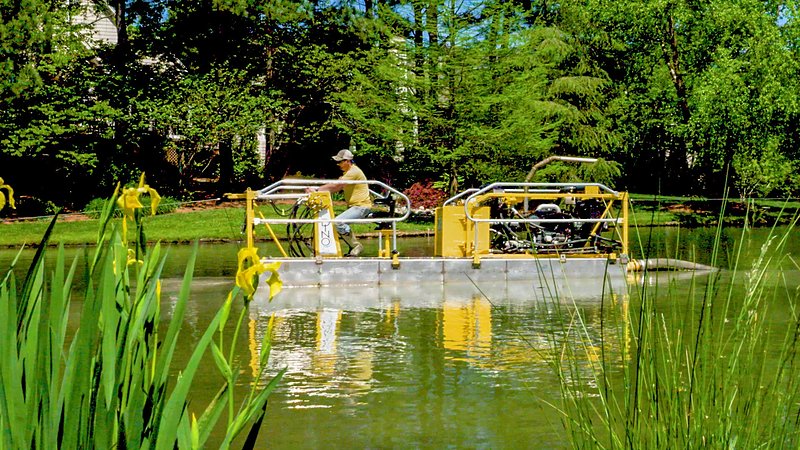
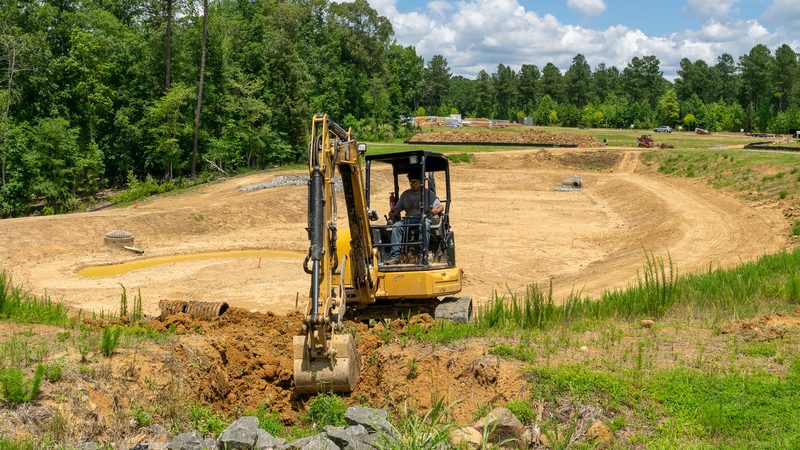
Mechanical dredging uses equipment such as an excavator or long reach machine to lift sediment out. Hydraulic dredging pumps a mix of water and sediment through a pipeline while the pond stays full, which disturbs less shoreline. We review the site and the sediment before recommending a method.
It depends on the method and the material. With pump and hydraulic dredging, we reuse suitable sediment to rebuild eroded shorelines when testing shows it is a good fit. Otherwise, we plan a disposal approach that fits the site and local requirements.
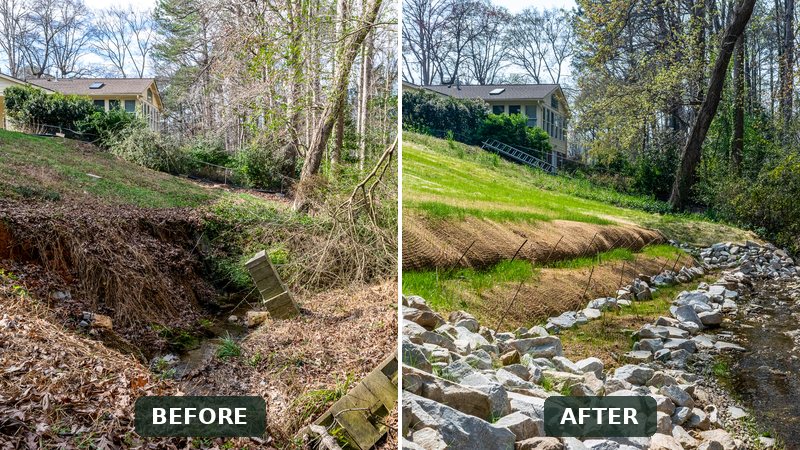
Shorelines wear away from wave action, runoff, changing water levels, and the loss of plants that hold soil in place. Once bare soil is exposed, it washes into the pond and adds to the sediment on the bottom. Stabilizing the bank protects both the land and the water.
We choose from options such as geotextile tubes, riprap, regrading, coir logs, and native plantings, based on the slope, the soils, and how the shoreline is used. Many projects combine more than one method for a result that holds up and looks good.
Yes. Our streambank stabilization and shoreline stabilization services address moving water and coastal conditions, which call for different designs than a pond bank. We assess each site before recommending an approach.