
Pond, Lake, and Stormwater Management in Montgomery County
Serving Rockville, Bethesda, Silver Spring, Gaithersburg, Germantown, and communities across Montgomery County.
Montgomery County Water Management Under Maryland Stormwater Standards
Montgomery County operates under one of the most rigorous stormwater management programs in the mid-Atlantic. The county holds a Municipal Separate Storm Sewer System permit from the Maryland Department of the Environment and enforces strict Environmental Site Design requirements for new and redeveloped properties. Aging ponds in established neighborhoods from Bethesda to Germantown sit alongside newer bioretention facilities in recent developments, and both types need ongoing professional maintenance.
Our Montgomery County team handles pond and lake maintenance, stormwater facility maintenance and inspections, corrective compliance repairs, fountain and aeration service, shoreline stabilization, dredging, and erosion control for properties throughout the county. Properties in the county fall within the Chesapeake Bay watershed, which adds nutrient reduction requirements managed through Maryland Total Maximum Daily Load compliance efforts. Our team handles all of those regulatory layers for property owners.
Reach out to Dragonfly Pond Works to arrange a site visit for your Montgomery County pond, lake, or stormwater facility.
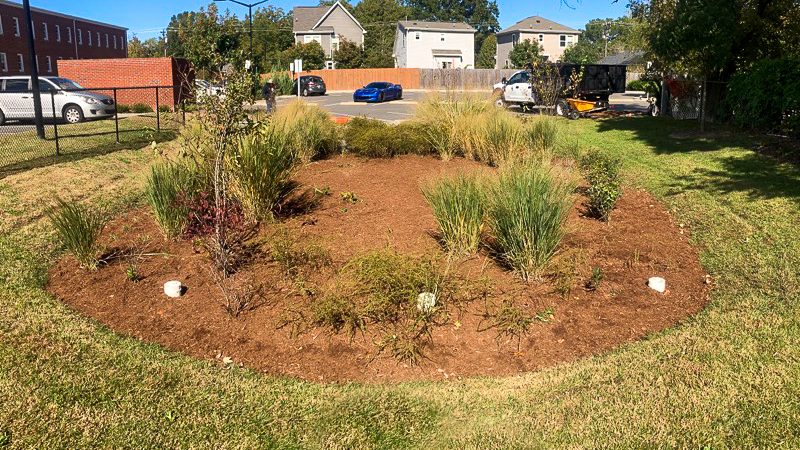
Stormwater bioretention restored to function as designed in a Montgomery County community
Area Services
We provide lake, pond, and stormwater management services across Montgomery County. Select a category to see the full list of services we offer at this location.
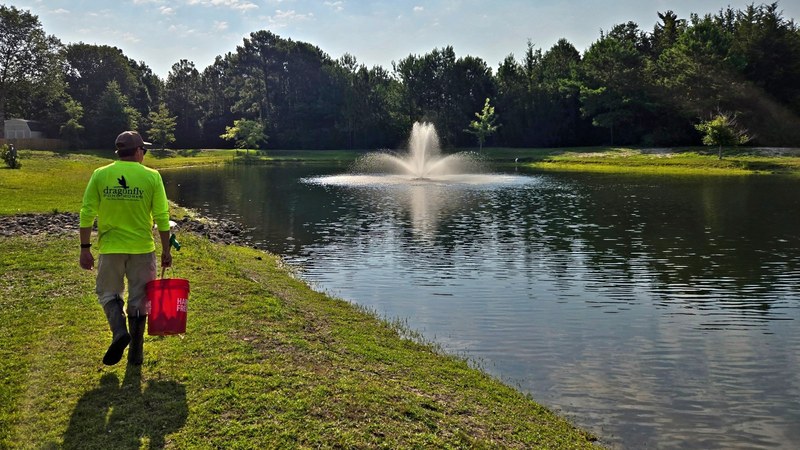


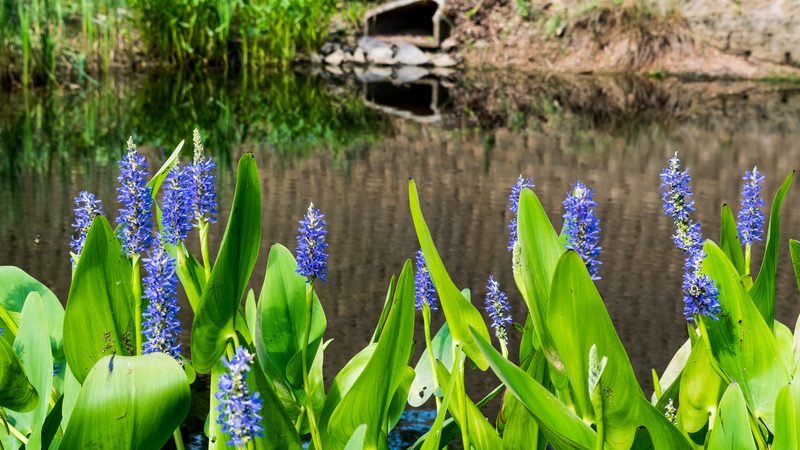

Recent Projects in Montgomery County
What Clients Are Saying
Montgomery County Coverage Area
Our Montgomery County branch covers the entire county from Bethesda and Chevy Chase in the south to Clarksburg and Damascus in the north, plus parts of Frederick, Howard, and Prince George counties. The Maryland Department of the Environment oversees the county MS Four permit, and Montgomery County Department of Environmental Protection runs its own stormwater management data tracking system for all sediment control permits. Because the county sits within the Chesapeake Bay watershed, Total Maximum Daily Load nutrient reduction requirements apply to many stormwater facilities. We serve the following communities:
- Rockville
- Bethesda
- Silver Spring
- Gaithersburg
- Germantown
- Clarksburg
- Olney
- Potomac
- Wheaton
- Takoma Park
- Kensington
- Chevy Chase
- Poolesville
- Damascus
- Burtonsville
- Colesville
- Aspen Hill
- North Potomac
- Darnestown
- Derwood
Frequently Asked Questions
Answers to some of the most frequently asked questions in the area. From local rules to algae, we've got you covered. If you have a different question, contact us.
Montgomery County operates under a Municipal Separate Storm Sewer System permit issued by the Maryland Department of the Environment. The county requires Environmental Site Design for new development and enforces maintenance standards for all permitted stormwater facilities. The Department of Environmental Protection tracks stormwater management data for every sediment control permit in the county. Dragonfly Pond Works is certified in the county and manages these compliance obligations on behalf of property owners.
Maryland law requires Environmental Site Design to the maximum extent practicable for all new development and significant redevelopment. This means stormwater management on your property may involve bioretention cells, micro-bioretention areas, rain gardens, permeable surfaces, and green roofs in addition to or instead of traditional ponds. Each type has specific maintenance needs that our team handles.
Montgomery County properties fall within the Chesapeake Bay watershed, which means stormwater systems must contribute to Total Maximum Daily Load reduction targets for nitrogen, phosphorus, and sediment. This affects how facilities are designed, maintained, and reported. Our maintenance programs are built to support those nutrient reduction goals alongside standard county permit requirements.
Yes. Montgomery County has some of the highest concentration of green infrastructure facilities in the region. We inspect and maintain bioretention cells, rain gardens, permeable pavement systems, sand filters, and other environmental site design features. Each facility type has specialized maintenance requirements, and our inspection reports satisfy county compliance documentation standards.
Many Montgomery County ponds were built decades ago during initial subdivision development. Over time, stormwater discharge, surface runoff, and slope instability cause the banks to erode and sediment to accumulate. Our team provides sediment surveys to measure current conditions and hydraulic dredging to restore pond volume without requiring full drainage.
We provide the maintenance documentation and inspection reports that property owners need to demonstrate compliance with county stormwater requirements. While the property owner is responsible for submitting required materials to the Department of Environmental Protection, our records are formatted to support that process and are available when county inspectors request documentation.
