
Pond, Lake, and Stormwater Management in Wilmington
Serving Wilmington, Leland, Hampstead, Carolina Beach, Wrightsville Beach, and the Cape Fear region.
Coastal Water Management for the Cape Fear Region
Wilmington sits where the Cape Fear River meets the Atlantic, and coastal conditions shape every pond and stormwater system in the area. High water tables, tidal influence, salt air, sandy soils, and hurricane-driven rainfall create maintenance challenges that inland communities rarely face. HOA ponds in Brunswick and New Hanover counties must handle heavy seasonal runoff while meeting North Carolina stormwater permit requirements.
Our Wilmington crew handles pond maintenance, stormwater facility maintenance and inspections, system repairs, fountain and aeration service, bank stabilization, dredging, and aquatic plant control throughout the Wilmington market. Our crew understands the coastal environment and the regulatory framework that governs stormwater facilities in the Cape Fear watershed, including oversight by the North Carolina Department of Environmental Quality and local programs in New Hanover and Brunswick counties.
Call Dragonfly Pond Works to schedule a site assessment for your Wilmington-area pond, lake, or stormwater system.
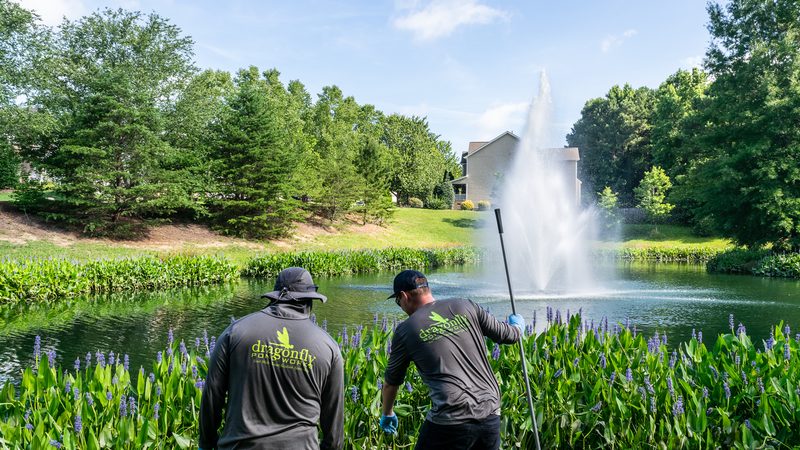
Coastal stormwater pond service in the Wilmington area
Area Services
We provide a full range of lake, pond, and stormwater management services in the Wilmington area. Select a category to explore what is available at this location.
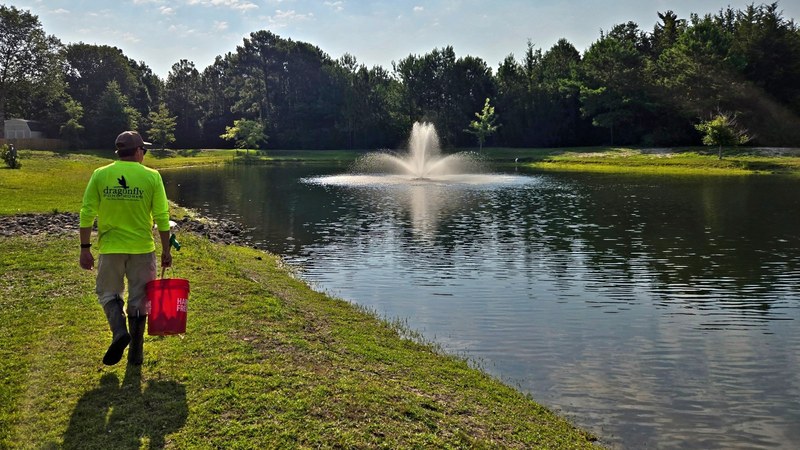


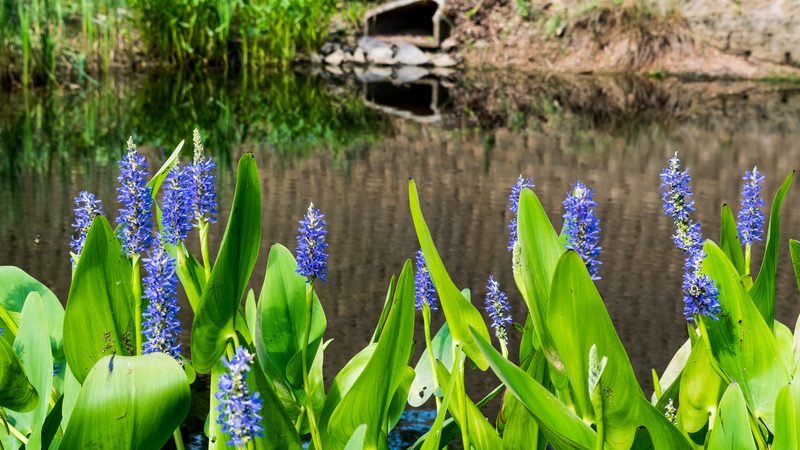

Recent Projects in Wilmington
What Clients Are Saying
Wilmington Coverage Area
Our Wilmington branch serves New Hanover, Brunswick, Pender, Columbus, and Onslow counties. Coastal development has accelerated across the region, and each new community adds ponds and stormwater detention systems that need ongoing professional care. Salt air, flat topography, high water tables, and intense summer storms make this one of the more demanding environments for water management infrastructure. Our team partners with property managers, HOA boards, commercial sites, developers, and municipalities to keep facilities compliant and functional year-round. We serve the following communities:
- Wilmington
- Leland
- Hampstead
- Carolina Beach
- Wrightsville Beach
- Kure Beach
- Southport
- Shallotte
- Ocean Isle Beach
- Sunset Beach
- Calabash
- Bolivia
- Surf City
- Topsail Beach
- Burgaw
- Castle Hayne
- Porters Neck
- Ogden
- Scotts Hill
- Jacksonville
Frequently Asked Questions
Answers to some of the most frequently asked questions in the area. From local rules to algae, we've got you covered. If you have a different question, contact us.
Salt air accelerates corrosion on metal components like fountain motors, aeration compressors, riser pipes, and control structures. It also stresses freshwater plantings along pond banks. Our coastal maintenance programs account for this by using corrosion-resistant equipment and salt-tolerant vegetation in shoreline restoration work.
If the pond is a permitted Stormwater Control Measure, the HOA is the legal permittee responsible for maintaining it. New Hanover County and the North Carolina Department of Environmental Quality both track compliance in the Wilmington area. Dragonfly Pond Works helps HOAs stay current with inspections, maintenance records, and any corrective work that may be needed.
Warm coastal temperatures, nutrient-rich runoff, and shallow pond depths create ideal growing conditions for invasive aquatic plants like torpedo grass, alligatorweed, and water hyacinth. Left unmanaged, these weeds choke pond outflows and reduce stormwater storage capacity. Our licensed applicators use targeted herbicide treatments and manual removal to control growth.
Yes, but coastal dredging projects often require coordination with local floodplain administrators and sometimes a Coastal Area Management Act permit through the North Carolina Division of Coastal Management. Our team handles the permitting process and works within the regulatory requirements specific to coastal New Hanover and Brunswick counties.
Major storms push large volumes of debris, sediment, and saltwater into ponds and stormwater systems. After a storm event, facilities often need assessment, debris removal, and repairs to outlet structures and embankments. Our Wilmington crew responds quickly after storm events to assess and restore affected systems.
Watch for visible seepage or wet spots on the downstream face, erosion channels on the spillway, animal burrows in the embankment, woody vegetation growing in the dam, and settlement or cracking along the crest. Coastal conditions can accelerate deterioration, so regular professional inspections are especially important in the Wilmington area. Our team evaluates dam condition as part of routine maintenance visits.
